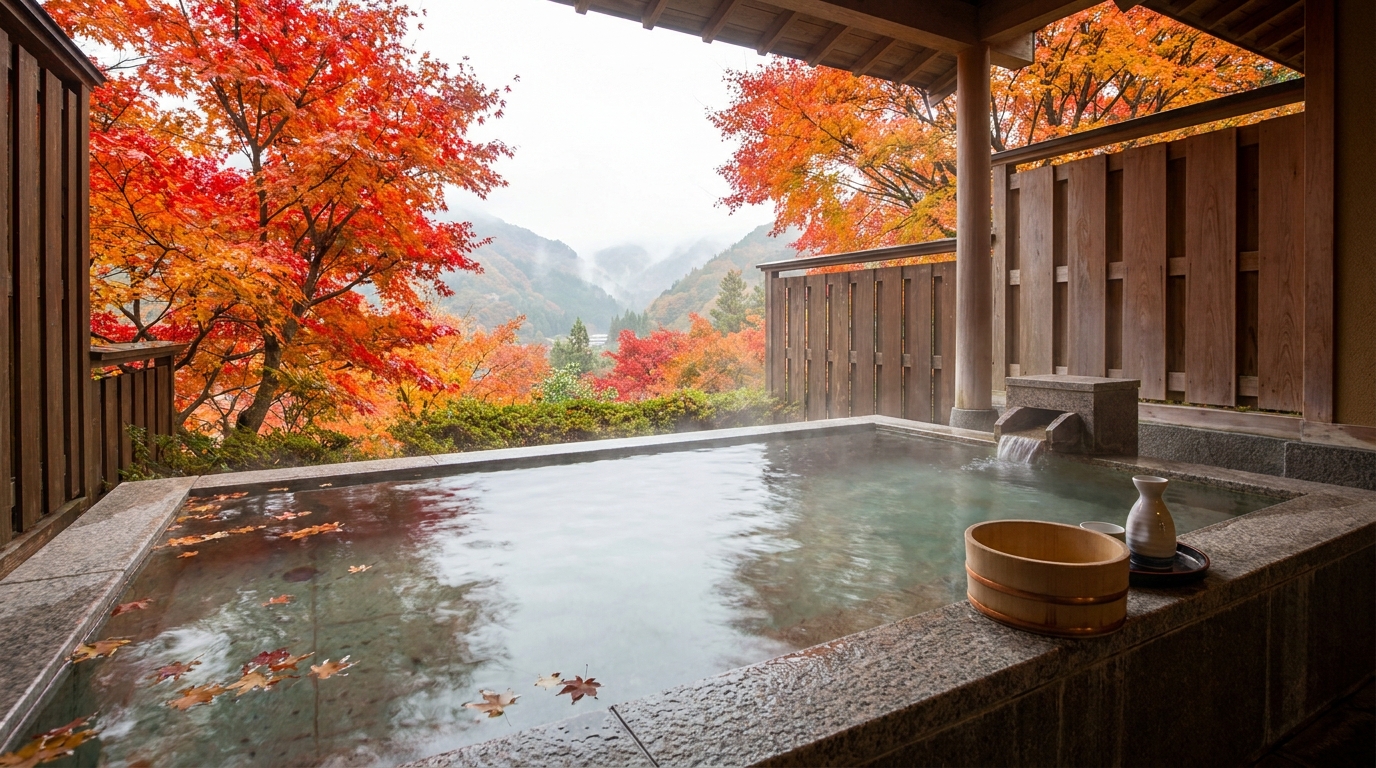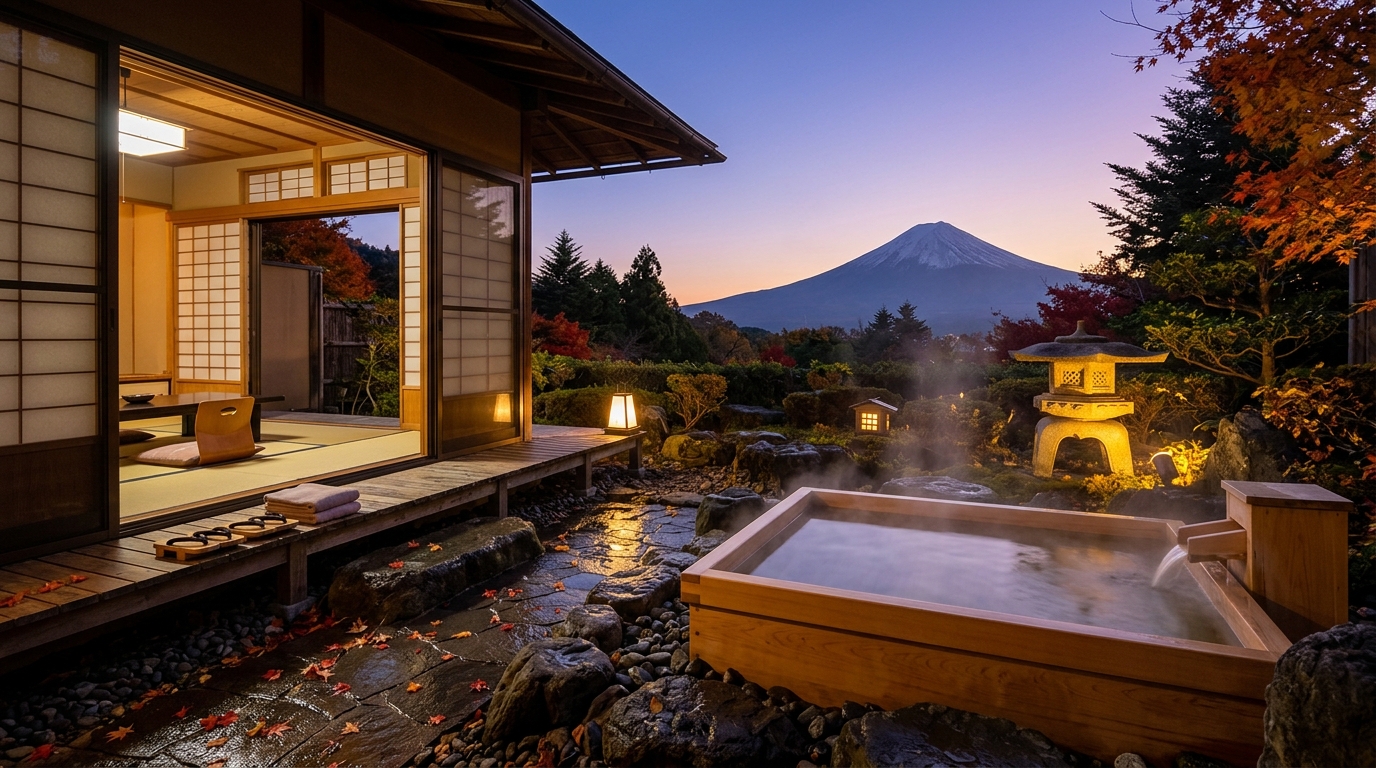
Japan has thousands of ryokans — but finding one where you can soak in your own private onsen without sharing with strangers? That takes more than a quick search.
I’ve spent 15+ years working in Japan’s travel industry, including senior roles at Japanese travel media and OTAs. This guide pulls together the best private onsen ryokans across Japan’s top destinations, organized by region so you can match the experience to your trip.
Quick Picks: Best Private Onsen Ryokans in Japan
Before we dive in — here are the standout picks if you just want a fast answer:
| Category | Pick | Region |
|---|---|---|
| Best Overall | Gora Kadan | Hakone |
| Best in Kyoto | Tawaraya Ryokan | Kyoto |
| Best Budget Pick | Yumoto Fujiya Hotel | Hakone |
| Best Near Tokyo | Hoshinoya Tokyo | Tokyo |
| Best in Kyushu | Yufuin Floral Village Ryokan | Yufuin |
| Best in Hokkaido | Jozankei Daiichi Hotel Suizantei | Sapporo / Jozankei |
What Is a Private Onsen Ryokan?
A private onsen ryokan (貸切温泉旅館) is a traditional Japanese inn where you can access a hot spring bath reserved exclusively for your group — either attached to your room or reservable as a standalone bath.
There are two main types:
1. In-Room Private Onsen (客室露天風呂)
The hot spring bath is built directly into your guest room — usually an open-air bath on your own private veranda. You can soak any time you like, day or night. This is the most intimate and luxurious option.
2. Reservable Private Bath (貸切風呂)
A separate private bath you book in advance for a set time slot (typically 45–60 minutes). Often complimentary for guests. Great if an in-room bath isn’t in your budget.
Both give you the privacy of a genuine hot spring experience without sharing with other guests.
Why Private Onsen? What Makes It Worth It
Japan’s traditional onsen (温泉) culture is built around communal bathing — and there’s genuine beauty in that. But for travelers with tattoos, couples on a romantic trip, families with small children, or anyone who simply prefers privacy, a private onsen is the better option.
Key advantages:
- Soak at your own pace — no time pressure, no strangers
- Ideal for tattoo-friendly soaking (communal baths often prohibit tattoos)
- More intimate and romantic for couples
- Easier for parents with young children
- Often more luxurious design and amenities
Private Onsen by Region
🗻 Hakone — Best Overall Destination

Hakone is Japan’s most popular onsen resort for Tokyo visitors, and for good reason: it sits inside Fuji-Hakone-Izu National Park, with volcanic hot springs, mountain scenery, and some of the finest ryokans in the country.
Most Hakone ryokans offer genuine natural hot spring water (温泉) from the volcanic geology of the Hakone caldera. Water quality here is excellent — often sulfurous and milky white, or clear and mineral-rich depending on the source.
Top picks with private onsen:
- Gora Kadan — former imperial villa, exceptional kaiseki cuisine, in-room private baths
- Hakone Ginyu — forest setting, outstanding private open-air baths
- The Hakone Open Air Museum area ryokans — great access to Hakone’s top sights
👉 Full guide: Best Ryokans in Hakone | Private Onsen in Hakone
Getting there: 85 minutes from Shinjuku by Odakyu Romance Car, or 50 minutes from Tokyo by Shinkansen to Odawara.
👉 How to get from Tokyo to Hakone
🏯 Kyoto — Best for Culture + Onsen
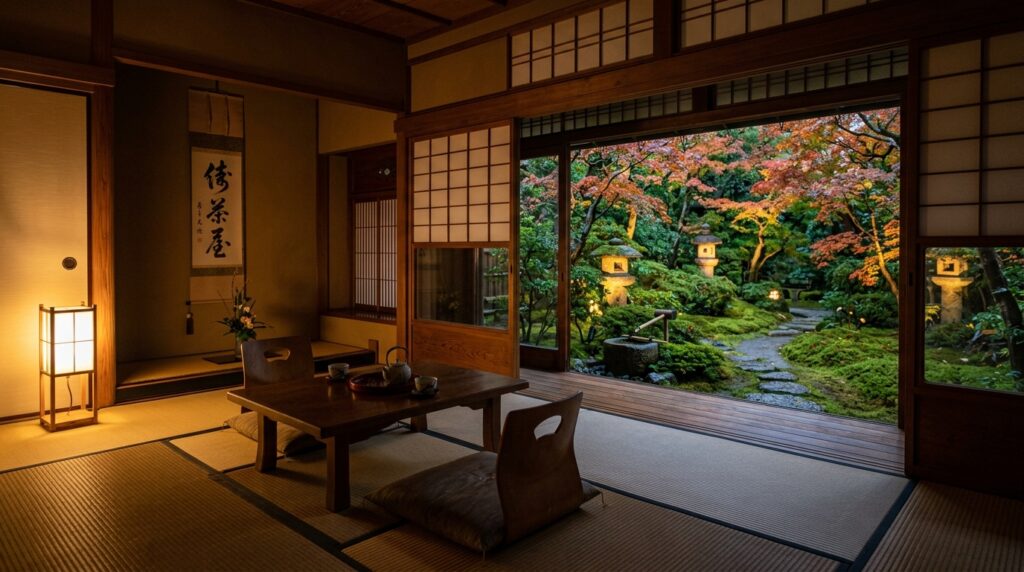
Kyoto’s ryokans are legendary — but true natural onsen is harder to find here. Most properties draw water from distant sources or use artificially heated mineral baths. That said, the cultural experience of staying in a Kyoto machiya-style inn or historic ryokan is unmatched anywhere in Japan.
If a genuine natural hot spring is non-negotiable, pair a Kyoto cultural visit with an onsen night in nearby Arima Onsen (one of Japan’s oldest hot spring towns, just 90 minutes from Kyoto).
Top picks with private onsen:
- Tawaraya Ryokan — Japan’s most famous ryokan, centuries of history, private baths available
- Hiiragiya Ryokan — classic Kyoto machiya style, intimate private baths
- Sowaka — Gion district, boutique luxury
👉 Full guide: Private Onsen in Kyoto | Best Ryokans in Kyoto with Private Onsen
🗼 Tokyo — Closest Private Onsen to the City
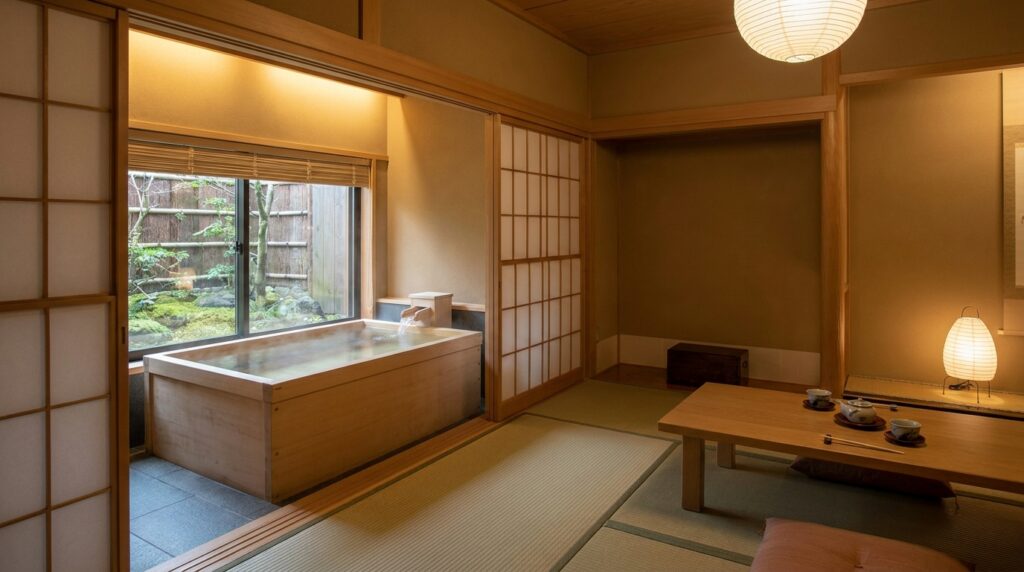
Finding a genuine natural hot spring in central Tokyo is difficult — the city sits on limited volcanic resources. What you’ll find instead are excellent private baths, often beautifully designed, with a handful of properties importing genuine onsen water from other regions.
If you want the full ryokan-with-natural-onsen experience, the best move is to stay in Hakone or Nikko. But if you’re Tokyo-based and want the closest thing without leaving the city:
Top picks:
- Hoshinoya Tokyo — the most sophisticated urban ryokan in Japan, private onsen water drawn from 1,500m underground
- Onsen Ryokan Yuen Shinjuku — excellent urban onsen atmosphere, reservable private baths
- Prostyle Ryokan Tokyo Asakusa — great value, in-room private baths
👉 Full guide: Private Onsen in Tokyo
🌋 Mt. Fuji Area — Onsen with the Iconic View
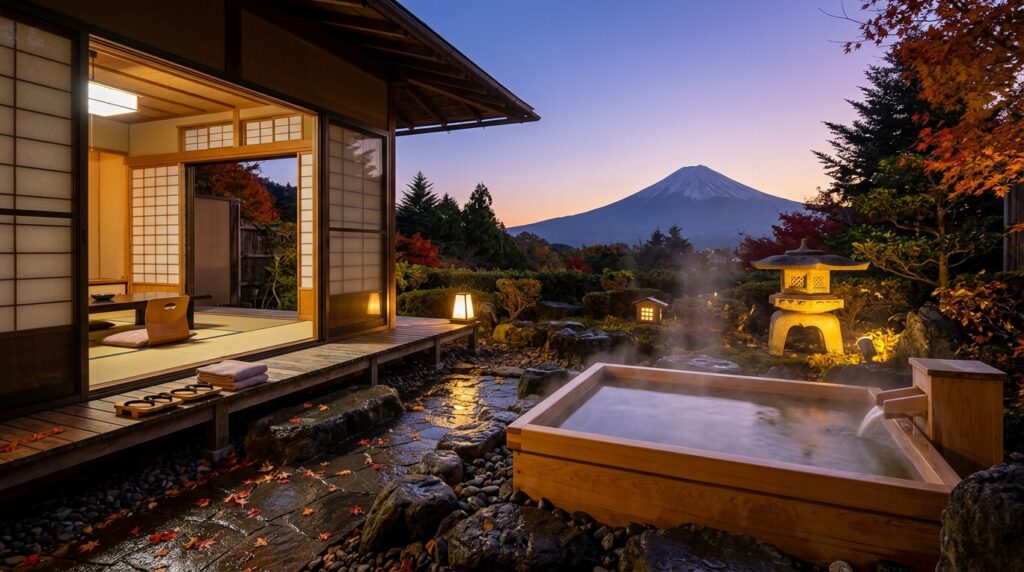
The area around Mt. Fuji — particularly Lake Kawaguchiko and Lake Yamanakako — has some of Japan’s most dramatic ryokan settings. On a clear morning, you can soak in an open-air private onsen with an unobstructed view of Fuji-san.
Natural hot spring quality here varies by property; the best ryokans source from volcanic vents in the Fuji Five Lakes area.
Top picks:
- Kozantei Ubuya — legendary Fuji views from private open-air baths
- Fuji Speedway Hotel — premium experience near Fuji Motorsport Museum
- Katsuzan Ryokan — intimate, authentic atmosphere with private baths
👉 Full guide: Private Onsen Near Mt. Fuji
🌿 Yufuin & Beppu (Kyushu) — Japan’s Onsen Capital
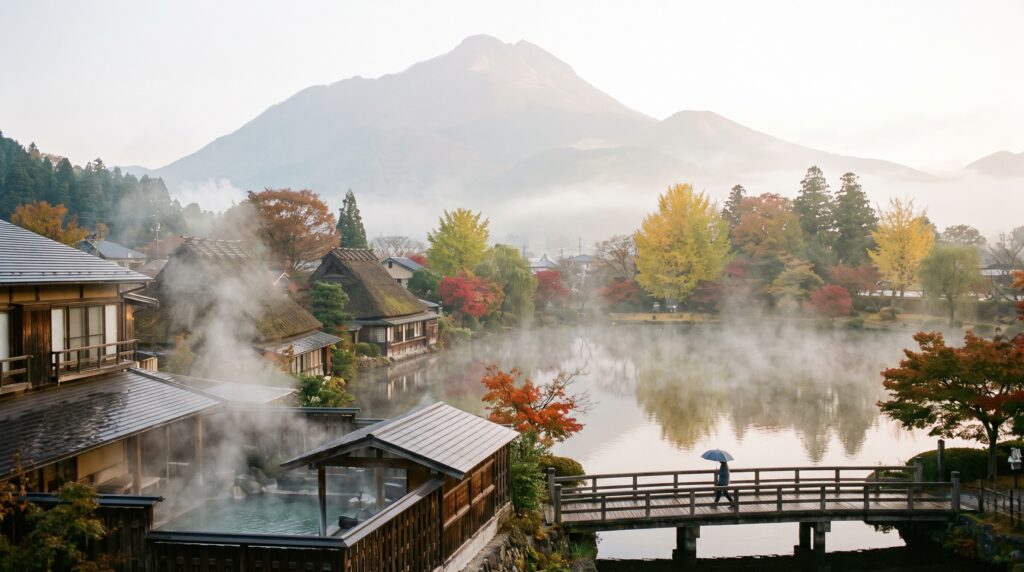
Kyushu is the heartland of Japanese onsen culture. Beppu has more hot spring sources than anywhere else on earth; Yufuin is a quieter, more refined resort town with boutique ryokans and excellent private onsen experiences.
If experiencing Japan’s onsen culture at its deepest is your goal — this is the destination.
Top picks:
- Yufuin Floral Village Ryokan — charming European-meets-Japanese setting, private in-room baths
- Sansou Murata — Yufuin’s most prestigious ryokan, exceptional private onsen
- Beppu Showaen — traditional Beppu atmosphere, mineral-rich waters
👉 Full guide: Best Ryokans in Yufuin & Beppu with Private Onsen
🐻 Hokkaido & Sapporo — Onsen in Snow Country
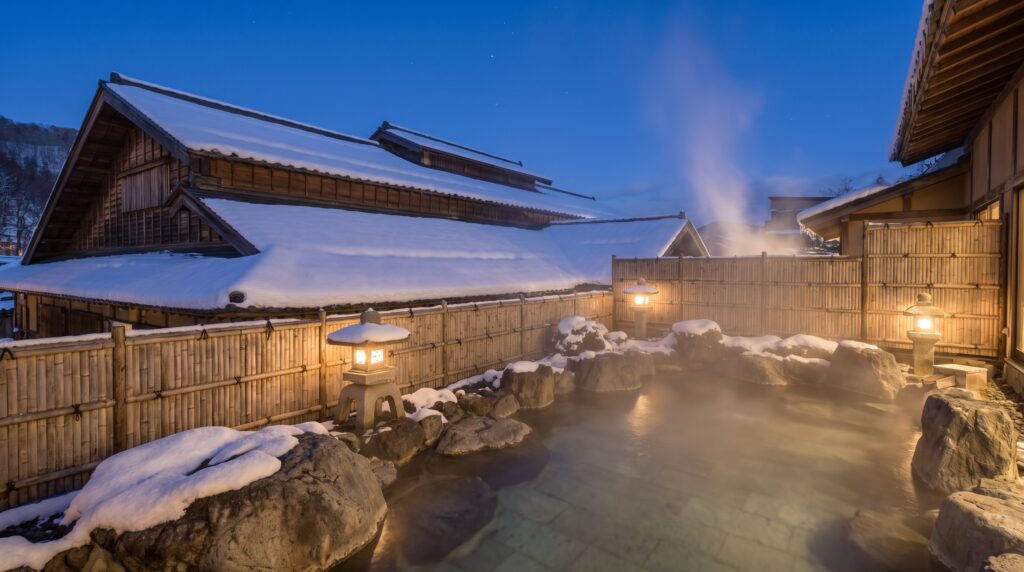
Hokkaido’s onsen ryokans are at their most magical in winter — soaking in a private outdoor bath while snowflakes fall around you is an experience unlike anything else in Japan. The region’s most famous onsen resorts are Jozankei (30 minutes from Sapporo), Noboribetsu, and Sounkyo.
Natural hot spring quality in Hokkaido is exceptional — sodium chloride springs, iron-rich waters, and sulfurous volcanic baths are all found here.
Top picks:
- Jozankei Daiichi Hotel Suizantei — outstanding private baths, easy access from Sapporo
- Noboribetsu Grand Hotel — classic resort experience, multiple private bath options
- Daisetsuzan Shirogane Kankou Hotel — remote mountain setting, superb onsen
👉 Full guide: Best Ryokans in Hokkaido with Private Onsen
🏔 Nikko — Historic Town, Quality Onsen
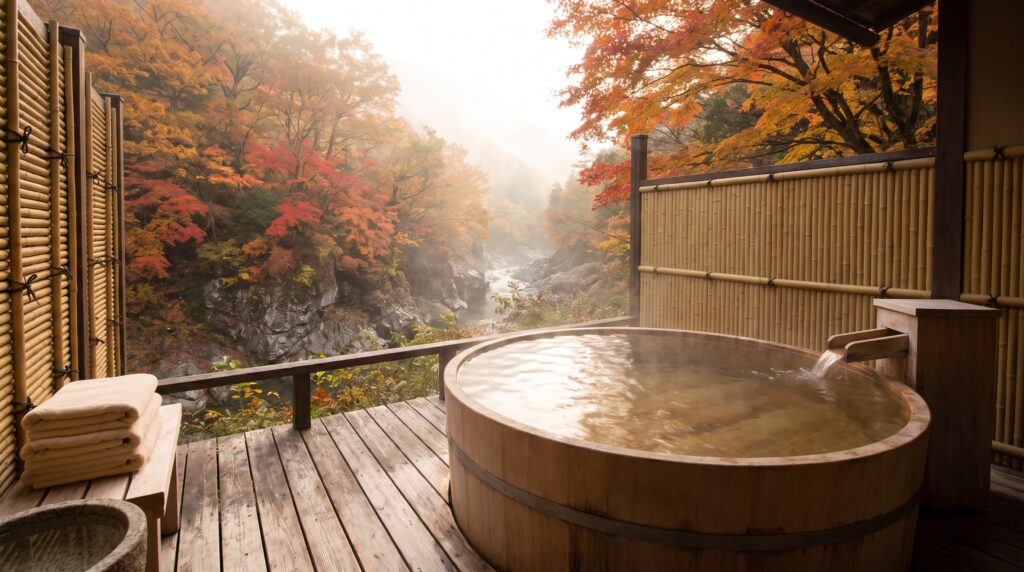
Nikko is best known for its UNESCO World Heritage shrines, but the surrounding mountains — particularly the Kinugawa Onsen and Nishimono Onsen areas — have excellent ryokans with private onsen. It’s an ideal add-on to a Nikko sightseeing trip, or a standalone onsen escape.
Top picks:
- Kinugawa Onsen Asaya — historic riverside resort, excellent private baths
- Nikko Kanaya Hotel — Japan’s oldest resort hotel (since 1873), elegant atmosphere
- Hatonoyu Motoyu Club — intimate, affordable private onsen experience
👉 Full guide: Private Onsen in Nikko
How to Choose: Key Questions to Ask Before You Book
1. Is it a natural hot spring (温泉)?
This matters more than people realize. Japan has strict legal definitions for what qualifies as “onsen” — the water must contain specific minerals at a minimum temperature. Properties that genuinely qualify will display their onsen analysis certificate (温泉分析書). If a listing says “private bath” without specifying 温泉, it may simply be a tub filled with tap water.
How to check: Look for the words 源泉 (natural hot spring source) or 天然温泉 (natural hot spring). Ask the property directly if unclear.
2. In-room bath or reservable private bath?
In-room baths (客室露天風呂) are attached to your room — you have access all night. Reservable baths (貸切風呂) are booked in advance for a set slot. For couples or long soaking sessions, in-room is worth the premium.
3. Tattoo policy
Japan’s communal baths traditionally prohibit tattoos. Private baths — whether in-room or reservable — are almost always tattoo-friendly since no other guests share the space. Confirm before booking if this matters to you.
👉 Related: Tattoo-Friendly Onsen in Kyoto | Tattoo-Friendly Onsen in Hakone
4. What’s included in the ryokan rate?
Traditional ryokans (especially those offering kaiseki cuisine) include dinner and breakfast in the room rate. This is called 2 meals included (2食付き). Budget ryokans may offer room-only. The included meal is often the most memorable part of the stay — factor it in when comparing prices.
5. Budget expectations
Private onsen ryokans vary enormously in price. A rough guide:
| Category | Price per person per night (incl. 2 meals) |
|---|---|
| Budget | ¥15,000–¥25,000 |
| Mid-range | ¥25,000–¥50,000 |
| Luxury | ¥50,000–¥150,000+ |
Prices are typically per person, not per room, and include multi-course kaiseki dinner and breakfast.
When to Visit: Seasonal Considerations
Spring (March–May): Cherry blossom season. Ryokan gardens peak. Book 3–6 months ahead.
Summer (June–August): Less crowded at many onsen resorts. Outdoor baths in the heat are less popular — some ryokans discount accordingly.
Autumn (September–November): Foliage season. One of the most beautiful times to soak in an outdoor private bath surrounded by red and gold maple leaves. Extremely popular — book early.
Winter (December–February): Snow country ryokans (Hokkaido, Tohoku, Niigata) are at their peak. Soaking in a private outdoor bath in the snow is a bucket-list Japan experience.
How to Book
Most top ryokans can be booked directly through their website (often cheaper) or via Agoda, Booking.com, or Rakuten Travel. For English-language booking with flexible cancellation, Agoda generally has the best selection.
Booking tips:
- Book 2–3 months ahead for peak seasons (cherry blossom, autumn foliage, New Year)
- Confirm meal preferences (vegetarian, allergy) at time of booking
- Ask about check-in time — traditional ryokans often ask you to arrive before 6pm for dinner
FAQ
What is a ryokan?
A ryokan (旅館) is a traditional Japanese inn characterized by tatami mat rooms, futon bedding on the floor, yukata robes, and Japanese cuisine. Many offer onsen (hot spring) facilities. They range from modest guesthouses to some of Japan’s most exclusive luxury accommodations.
What’s the difference between a ryokan and a hotel?
Hotels offer Western-style rooms with beds. Ryokans offer tatami rooms with futons, Japanese meals, and a deeper connection to traditional culture. Many high-end ryokans also offer Western-style bed options if you prefer.
Are private onsen ryokans worth the premium?
Yes — if an intimate Japanese inn experience is what you’re after. The private onsen is often the highlight of the entire trip. The combination of kaiseki dinner, yukata robes, and soaking in your own natural hot spring at midnight is genuinely unlike anything else.
Can I visit a ryokan just for the onsen without staying?
Some ryokans offer day-use onsen access (日帰り入浴), but availability for private baths varies. It’s best to call ahead and confirm. For reliable day-use private onsen options, see the destination-specific guides linked above.
Do ryokans in Japan speak English?
Major ryokans in popular tourist areas (Hakone, Kyoto, Nikko, Sapporo) typically have English-speaking staff or at minimum English menus and materials. Smaller rural ryokans may have limited English — booking through a platform like Agoda can help bridge the communication gap.
How far in advance should I book?
For peak seasons (cherry blossom in April, autumn foliage in October–November, New Year), book 3–6 months in advance. Off-peak travel allows for more flexibility — 4–6 weeks is generally fine.
Final Thoughts
Japan’s private onsen ryokans are one of the genuinely unmissable travel experiences in the world. Whether you’re soaking in a mountain bath overlooking Mt. Fuji, watching snow fall on a Hokkaido winter evening, or relaxing after a day of Kyoto temple-hopping — the combination of natural hot springs, Japanese hospitality, and kaiseki cuisine is hard to match anywhere.
The guides below cover each destination in detail, with specific hotel picks, pricing, and booking advice:
- 🗻 Hakone: Best Ryokans | Private Onsen
- 🏯 Kyoto: Private Onsen | Ryokans with Private Onsen
- 🗼 Tokyo: Private Onsen
- 🌋 Mt. Fuji: Private Onsen Near Mt. Fuji
- 🌿 Yufuin & Beppu: Best Ryokans
- 🐻 Hokkaido: Best Ryokans
- 🏔 Nikko: Private Onsen