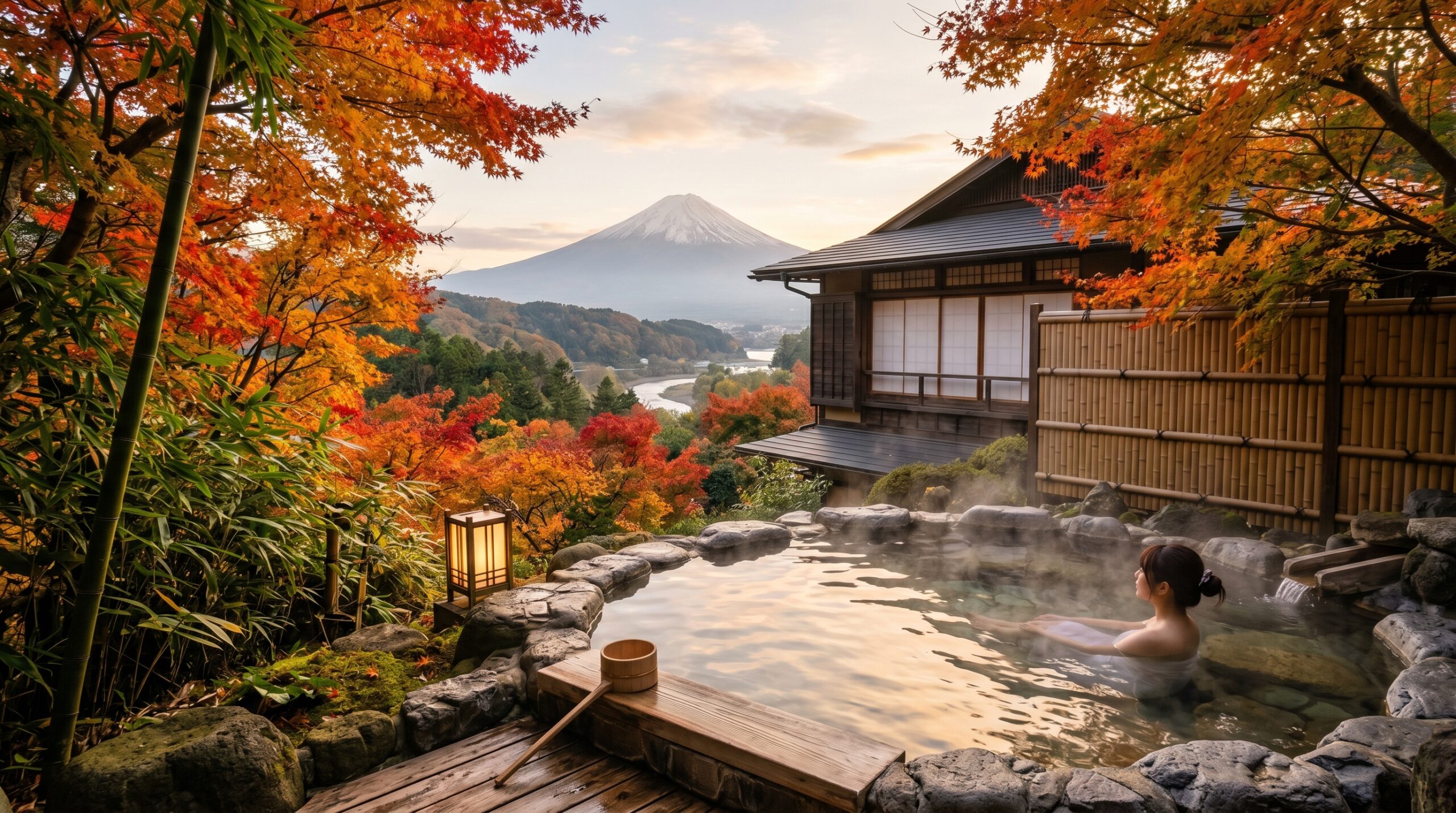
A private onsen bath is arguably the single best upgrade you can make to a Japan trip. No strangers, no tattoo anxiety, no carefully managed soaking schedules – just you, natural hot spring water, and usually a view of a forest, mountain, or ryokan garden.
Hakone is the most accessible onsen destination from Tokyo, and it happens to have some of the finest private onsen options in Japan across every price point. With 15+ years working in the Japanese travel industry, this guide cuts through the noise to tell you exactly which properties are worth your money – and which ones to skip.
Japan travel professional with 15+ years of industry experience, including senior roles at major Japanese travel companies and media. Every recommendation in this guide is based on firsthand knowledge. We are never paid directly by hotels to feature them.
🛁 Planning an onsen getaway near Tokyo? Check out our honest guide to the best onsen ryokans near Tokyo — covering Hakone, Izu, and Nikko.
- TL;DR Quick Picks
- What Is a Private Onsen?
- How to Get to Hakone from Tokyo
- Best Private Onsen Ryokans by Category
- Day-Use Private Onsen: No Overnight Stay Required
- Tattoo Policy: The Honest Guide
- What to Check Before You Book
- Best Areas to Stay in Hakone for Private Onsen
- Tips From 15 Years in Japan Travel
- FAQ
- What is the difference between a private onsen and a regular onsen in Hakone?
- Are private onsens tattoo-friendly in Hakone?
- How much does a private onsen ryokan cost in Hakone?
- Can I use a private onsen in Hakone without staying overnight?
- Do I need to be naked in a Japanese onsen?
- What is the best private onsen ryokan for couples in Hakone?
- How far in advance should I book a private onsen ryokan?
- Final Thoughts
TL;DR Quick Picks
Short on time? Here are my top picks for Hakone private onsen experiences:
- Best Overall (Luxury): Gora Kadan – former Imperial family retreat, stunning garden, private open-air baths Check availability on Agoda

- Best Private In-Room Onsen (Mid-Range): Tensui Saryo – excellent value, upper-floor rooms with dedicated private onsen Check availability on Agoda

- Best for Families / Tattoo-Friendly: Hakone Kowakien Ten-yu – all 150 rooms have private open-air baths, family-friendly buffet Check availability on Agoda

- Best Day-Use Private Bath: Hakone Yuryo – 19 private open-air rooms, no overnight stay needed
What Is a Private Onsen?
“Private onsen” (貸切風呂, kashikiri-buro) means a hot spring bath reserved exclusively for your group – no sharing with other guests. There are two main types:
1. In-Room Private Onsen (部屋付き露天風呂)
A private open-air or indoor bath built directly into your guest room. You can use it any time, day or night. This is the gold standard – and commands a price premium.
2. Reservable Private Bath Facility (貸切風呂)
Separate private bath rooms that guests book in advance for a set time slot (usually 45–60 minutes). Included with your stay at some properties; extra charge at others.
Both types are generally tattoo-friendly, since you’re in a private space. The public communal baths (daiyokujo) are where tattoo restrictions typically apply.
How to Get to Hakone from Tokyo
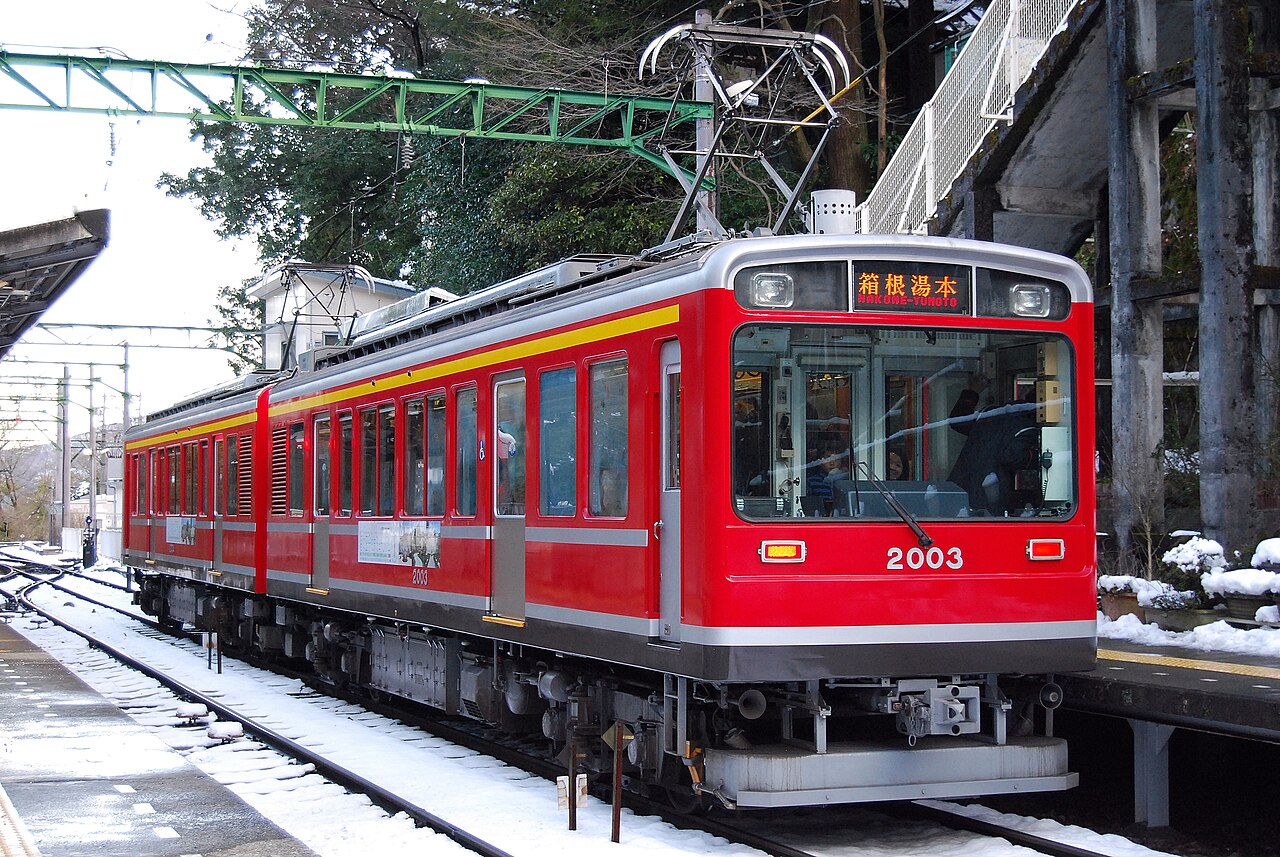
Hakone is about 90 minutes from Shinjuku by the Odakyu Romancecar — no transfers required. The Hakone Free Pass (Klook) covers unlimited use of most local transport once you arrive. Book Hakone Free Pass on Klook
→ For full routing options, transport costs, and area access: Tokyo to Hakone Transport Guide
Best Private Onsen Ryokans by Category
Luxury: When Price Is Not the Priority
Gora Kadan
Location: Gora | Price: ~¥80,000–150,000/night (2 people, meals included)
Gora Kadan is in a league of its own. Originally built as a summer retreat for the Imperial family in 1932, it sits in an immaculate Japanese garden and offers some of Hakone’s most refined hospitality. Upper-category rooms include private open-air baths with garden or forest views. The cuisine (kaiseki) is exceptional.
This isn’t just a hotel stay – it’s a statement. Book six to twelve months in advance for peak seasons.
Hakone Ginyu
Location: Gora | Price: ~¥80,000–120,000/night
An intimate boutique property with floor-to-ceiling windows and private open-air rotenburo suites. The design is modern Japanese – clean lines, natural materials, zero clutter. Every suite has its own private onsen. Excellent for couples celebrating a milestone.
Hakone Kyuan
Location: Gora hillside | Price: ~¥70,000–100,000/night
Every single room at Hakone Kyuan includes a private open-air rotenburo onsen and rainfall shower. The ryokan has only a handful of rooms, so service is genuinely personal. If you want the private onsen experience without the overwhelming scale of larger properties, this is a strong choice.

Private In-Room Onsen: Best Value Options
Tensui Saryo
Location: Gora (near Hakone Gora Park and Gora Station) | Price: ~¥40,000–75,000/night
One of the best price-to-quality ratios in Hakone’s private onsen category. Upper-floor rooms come with dedicated private in-room onsens – request these specifically when booking. The welcome foot bath on arrival and complimentary plum wine set a relaxed tone immediately.
My honest take: Tensui Saryo consistently punches above its price point. It’s my go-to recommendation for first-time ryokan guests who want a proper private onsen without the Gora Kadan price tag.
Hakone Airu
Location: Near Hakone-Yumoto Station (10-min walk) | Price: ~¥45,000–80,000/night
An unusual property: the lobby features a wall-sized aquarium bar, and rooms have a distinctly tropical flair. But the onsen is the real deal – every room comes with a mountain-view private open-air hot spring bath. Easy access from Hakone-Yumoto makes this a practical choice if you’re arriving without the Free Pass.

Hakone Retreat villa by Onko Chishin
Location: Forested area of Hakone | Price: ~¥50,000–90,000/night
Adults-only. Western-style guest rooms (beds rather than futon) with private onsens fed by volcanic spring water. If you want the onsen experience but prefer Western-style sleeping arrangements, this is one of the few properties that does it well.
Best for Families
Hakone Kowakien Ten-yu
Location: Kowakidani | Price: ~¥30,000–50,000/night (per person, meals included)
Here’s the standout family option: all 150 rooms have private open-air baths. This means no navigating shared bath etiquette with kids in tow, and no concern about tattoo policies. The buffet covers Japanese, Western, and Chinese options with vegetarian choices – rare for a ryokan.
Ten-yu is a large facility, so it lacks the intimate atmosphere of smaller ryokans. But for families who want the private onsen experience without stress, it’s one of the most practical options in Hakone.
Laforet Hakone Gora Yunosumika
Location: Near Nakagora Cablecar Station | Price: ~¥30,000–55,000/night
A hybrid hotel/ryokan with a classic Japanese aesthetic. Premium rooms include private open-air baths. Notably dog-friendly – one of the few properties in Hakone that allows pets.
Best Value: Private Onsen Without Breaking the Bank
Kino-yu Setsugetsuka
Location: Gora Station (directly in front) | Price: ~¥25,000–40,000/night
158 rooms, all with private cypress (hinoki) open-air baths. Note: some rooms use heated water rather than natural hot spring water, so check when booking if authenticity matters to you. But for the price and the unbeatable location right at Gora Station, this is remarkable value.

Yuyado Yamanoshou
Location: Near the Botanical Garden of Wetlands | Price: ~¥25,000–40,000/night
Deeply traditional: tatami floors, hori kotatsu (sunken floor heating table), and hot spring water sourced from Owakudani Onsen. Private baths are available by reservation. If you want to experience a genuinely old-school Japanese inn at a reasonable price, Yamanoshou delivers.

Lakeside: Private Onsen Near Lake Ashi
Yoshimatsu
Location: Near Lake Ashi | Price: ~¥50,000–85,000/night
A sukiya-style ryokan (the traditional Japanese architectural style associated with tea houses) near the shores of Lake Ashi. Upper-category rooms feature outdoor hot spring baths – on clear days, you might catch a view of Mount Fuji. Unique and atmospheric.
Hakone Ashinoko Hanaori
Location: Lake Ashi, near the Pirate Ship port | Price: ~¥45,000–75,000/night
Rooms with private open-air baths and panoramic lake views. The buffet is considered one of the best in Hakone – a genuine plus if you care about food alongside your onsen experience.
Day-Use Private Onsen: No Overnight Stay Required
Not every Hakone trip is an overnight one. If you’re doing a day trip from Tokyo and want the private onsen experience, these are your best options.
Hakone Yuryo
The gold standard for Hakone day-use private baths. Hakone Yuryo has 19 private open-air hot spring rooms that you can book by the hour – no overnight stay required. The facility is tattoo-friendly (private rooms only), clean, and well-managed. Located near Hotel Okada, with some rooms accessible to hotel guests directly.
Pro tip: Book online in advance, especially on weekends. Walk-in availability is limited and can disappear fast in peak season.
Mount View Hakone
A day-use facility featuring one of Hakone’s rarest onsen waters: milky-white sulfur (nigori-yu). This type of sulfur spring is unusual in the region, and if you’re an onsen enthusiast, it’s worth seeking out specifically for the water quality.
Tattoo Policy: The Honest Guide
This is the question I get more than any other from international travelers.
The reality in 2026:
- Private in-room baths: Tattoos are almost always fine. You’re in a private space.
- Reservable private baths: Tattoos are generally fine – again, private space.
- Communal (daiyokujo) baths: Tattoo restrictions still exist at most properties, though enforcement varies. Some offer cover seal (shiru) solutions.
Properties with explicit tattoo-friendly policies for private baths:
- Yumoto Fujiya Hotel (provides cover seals)
- Hotel Okada / Hakone Yuryo (private baths only)
- Hakone Kowakien Ten-yu (private rooms)
My honest advice: If you have tattoos, book a room with a private in-room onsen. This eliminates the issue entirely. Any property listed in the “In-Room Onsen” sections above will work for you.
What to Check Before You Book
Before confirming any reservation, verify these points:
1. Onsen source (源泉)
Is it genuine hot spring water (onsen)? Or heated tap water (maki-yu)? Some budget properties use heated water, which is not the same experience. Kino-yu Setsugetsuka is a notable example where some rooms use heated water.
2. Private bath access hours
In-room baths: use any time. Reservable private baths: usually 30–90 minute slots, sometimes with surcharge (¥3,000–5,000 per session).
3. Meal inclusions
Most traditional ryokans include dinner (kaiseki) and breakfast in the room rate. Verify what’s included – the meal component can add ¥15,000–30,000 per person in value.
4. Minimum night requirements
Some high-end ryokans (especially Gora Kadan) require a minimum 2-night stay during peak periods.
5. Check-in / check-out times
Ryokan check-in is typically 3–4 PM; check-out 10–11 AM. Earlier than hotels. Plan your Hakone transport accordingly.
Best Areas to Stay in Hakone for Private Onsen
Gora
The heart of Hakone’s luxury ryokan district. Higher elevation, forested, quieter. Best for: Gora Kadan, Hakone Ginyu, Hakone Kyuan, Tensui Saryo, Kino-yu Setsugetsuka.
Hakone-Yumoto
The main transport hub – all trains and buses connect here. More lively, less serene than Gora, but much easier access. Best for: Hakone Airu, Kumo Inn Hakone, Yumoto Fujiya Hotel.
Sengokuhara / Kowakidani
Quieter areas known for natural surroundings. Best for: Hakone Kowakien Ten-yu, Hakone Retreat villa.
Lake Ashi Area (Hakone-machi / Motohakone)
Furthest from Tokyo but offers lake views and a distinct atmosphere. Best for: Yoshimatsu, Hakone Ashinoko Hanaori.
Tips From 15 Years in Japan Travel
Book early. For premium private onsen rooms (especially Gora Kadan and Hakone Ginyu), book 3–6 months in advance for autumn foliage season (November) and Golden Week (late April/early May). These fill up completely.
Midweek is significantly cheaper. Weekday rates at most ryokans are 20–40% lower than weekend rates. If your schedule is flexible, this alone can save ¥20,000–30,000 per stay.
Arrive with minimal luggage. Ryokan rooms are designed around a tatami aesthetic. Rolling suitcases can feel awkward in the space. Use the Hakone Free Pass luggage forwarding option if you’re continuing your Japan trip afterward.
Ask about upgrades at check-in. Many ryokans hold back their best private onsen rooms for direct bookings. If you’re staying multiple nights, it’s worth asking at check-in whether a room with a private bath is available.
FAQ
What is the difference between a private onsen and a regular onsen in Hakone?
A regular onsen (daiyokujo) is a shared communal bath where you soak alongside other guests – separated by gender. A private onsen (kashikiri-buro) is reserved exclusively for your group. Private onsens are generally more relaxed, tattoo-friendly, and allow mixed-gender soaking (couples, families).
Are private onsens tattoo-friendly in Hakone?
Yes, in almost all cases. Private onsens are enclosed spaces not shared with other guests, so tattoo restrictions (which exist primarily to avoid offending other bathers in communal spaces) generally don’t apply. Always confirm with the property before booking if this is a concern.
How much does a private onsen ryokan cost in Hakone?
Per night for two people including meals:
- Budget: ¥25,000–40,000 (~$170–270 USD)
- Mid-range: ¥40,000–75,000 (~$270–500 USD)
- Luxury: ¥80,000–150,000+ (~$530–1,000 USD)
Can I use a private onsen in Hakone without staying overnight?
Yes. Hakone Yuryo offers 19 private open-air bath rooms bookable by the hour (no overnight stay required). Book in advance via Klook – availability fills quickly on weekends.
Do I need to be naked in a Japanese onsen?
Yes, bathing suits are not permitted in traditional Japanese onsens – public or private. Towels are typically provided, but you enter the bath without them. Small hand towels can be placed poolside during your soak.
What is the best private onsen ryokan for couples in Hakone?
For romance and special occasions, I’d recommend Gora Kadan (top budget, extraordinary experience), Hakone Ginyu (modern luxury, more intimate), or Tensui Saryo (best value for a genuinely special night).
How far in advance should I book a private onsen ryokan?
For peak seasons (November foliage, Golden Week, New Year), book 3–6 months ahead. For regular weekends, 4–8 weeks is usually sufficient. Weekdays often have availability with 1–2 weeks’ notice.
Final Thoughts
Hakone’s private onsen scene is genuinely world-class. Whether you’re splurging at Gora Kadan or keeping it reasonable at Tensui Saryo or Kino-yu Setsugetsuka, the experience of soaking in your own hot spring bath – often with a forest or mountain view – is something most travelers don’t forget.
For first-timers: Tensui Saryo at the mid-range level, or Hakone Kowakien Ten-yu for families. For special occasions: Gora Kadan or Hakone Ginyu. For day trips: Hakone Yuryo, booked in advance on Klook.
→ For a broader comparison of ryokans across all budgets (not just private onsen): Best Ryokans in Hakone: Honest Picks
→ For hot spring types, etiquette, and the best onsen areas: Hakone Onsen Guide
If you’re combining Hakone with a broader Japan itinerary, pair it with Kyoto for a complete ryokan and onsen experience – see our (guide coming soon) guide to ryokans in Kyoto.
For help planning your Tokyo base before heading to Hakone, or for transport logistics, visit our Tokyo to Hakone guide.
This guide was written by a Japan travel professional with 15+ years of experience working with major Japanese travel media. Recommendations are based on industry expertise and research – not paid placements.