Finding a private onsen in Tokyo is harder than it sounds — and I want to be upfront with you about why.
Tokyo sits on limited natural hot spring resources. Unlike mountain onsen towns like Hakone or Nikko, where mineral-rich water bubbles naturally from the earth, central Tokyo has very few natural hot springs. What you’ll find instead are excellent private baths — intimate soaking rooms that you reserve exclusively for yourself, often beautifully designed in the ryokan tradition. A handful of properties do bring in genuine hot spring water from other regions, and I’ll flag those clearly.
If a true natural onsen is your priority, the best move is to stay one or two nights at a ryokan in Hakone or book a private onsen ryokan in Kyoto. But if you’re based in Tokyo and want the closest thing to that experience right in the city — this guide is exactly what you need.
Japan travel professional with 15+ years of industry experience, including senior roles at major Japanese travel companies and media. Every recommendation in this guide is based on firsthand knowledge. We are never paid directly by hotels to feature them.
- Quick Picks: Best Private Onsen Stays in Tokyo
- The Honest Truth About Private Onsen in Tokyo
- How to Choose a Private Onsen Stay in Tokyo
- Best Luxury Private Onsen Ryokan in Tokyo
- Best Private Bath in the Room
- Best Value Private Onsen Stays
- Best Family-Friendly Options
- Day-Use Private Onsen in Tokyo
- If You Want the Real Thing: Near-Tokyo Ryokan
- Policies to Check Before You Book
- FAQ
- Final Thoughts
Quick Picks: Best Private Onsen Stays in Tokyo
| Category | Pick | Why | links |
|---|---|---|---|
| Best Luxury | Hoshinoya Tokyo | Rooftop natural hot spring, stunning design | Check availability on Agoda
 |
| Best Private Bath in Room | Prostyle Ryokan Tokyo Asakusa | In-room semi-open-air bath, excellent reviews | Check availability on Agoda
 |
| Best Boutique | Cyashitsu Ryokan Asakusa | Reservable open-air cypress bath, sky views | Check availability on Agoda
 |
| Best Value | Edo Sakura | Affordable, design-forward, private bath option | Check availability on Agoda
 |
| Best Neighborhood Vibe | Onsen Ryokan Yuen Shinjuku | Rooftop skyline onsen, urban zen feeling | Check availability on Agoda
 |
The Honest Truth About Private Onsen in Tokyo
Before I dive in, let me save you some frustration.
Most “private onsen” in Tokyo are not fed by natural hot springs. They’re private baths — beautifully designed, serene, and intimate, but not technically *onsen* in the strict Japanese definition. This is simply a geographic reality: Tokyo’s geology doesn’t produce the same mineral-rich waters you find in Hakone, Nikko, or Beppu.
There are exceptions. Hoshinoya Tokyo brings in genuine natural hot spring water to its rooftop communal bath (though it’s shared, not private). Some Asakusa properties source kuroyu — Tokyo’s distinctive dark mineral water found in older sento neighborhoods — for their public baths.
For most travelers, this distinction matters less than you’d think. A well-designed private bath in a beautiful ryokan setting, with attentive service and a kaiseki meal, delivers most of what people are actually searching for: calm, privacy, and a taste of traditional Japan.
How to Choose a Private Onsen Stay in Tokyo
Private Room Bath vs. Reservable Private Bath
There are two types of private bath experiences in Tokyo ryokan:
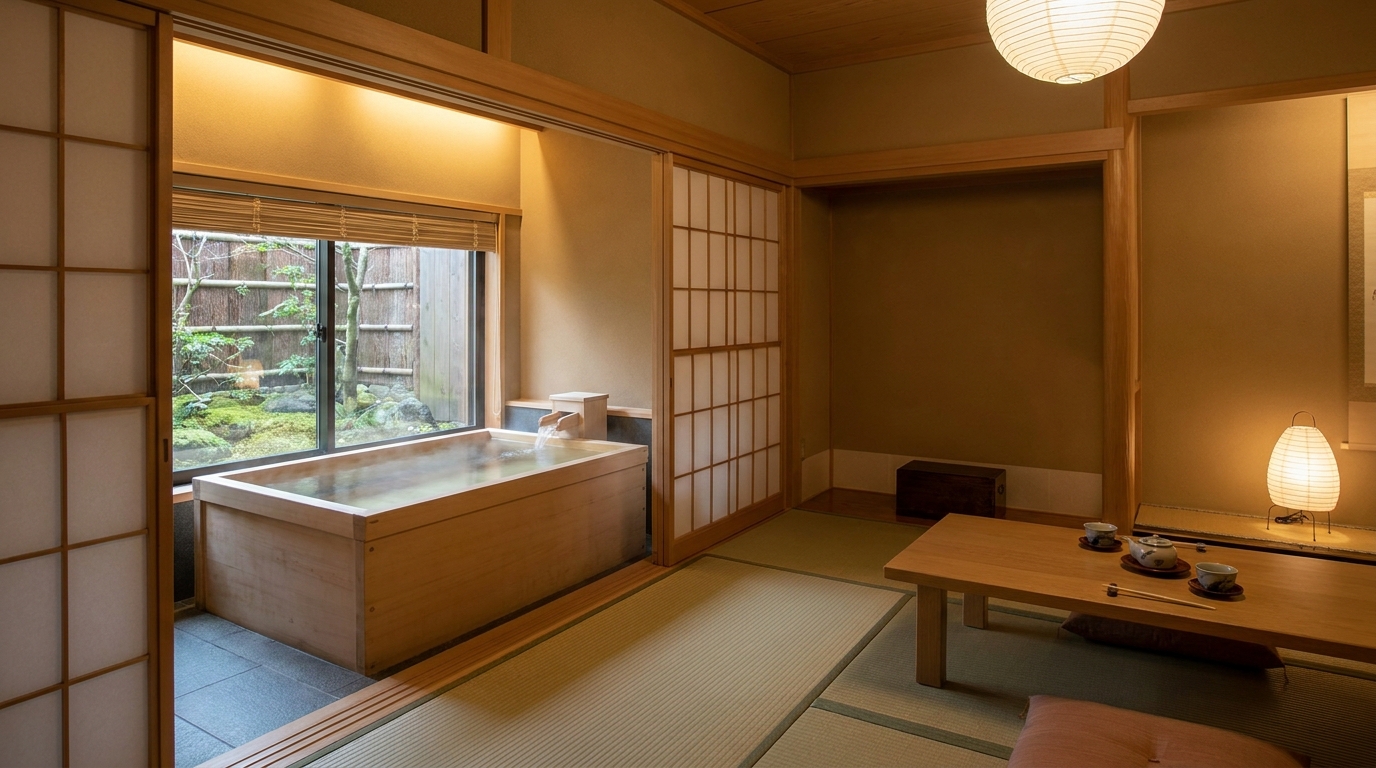
In-room private bath: The bath is attached directly to your room — you use it whenever you want, for as long as you want. This is the more luxurious option and commands a price premium.
Reservable private bath: The property has one or more private bath rooms that any guest can book in time slots (typically 45–60 minutes). These are often beautifully designed and feel genuinely special, but you need to reserve early.
What Does a Ryokan Stay Include?
Traditional ryokan usually include:
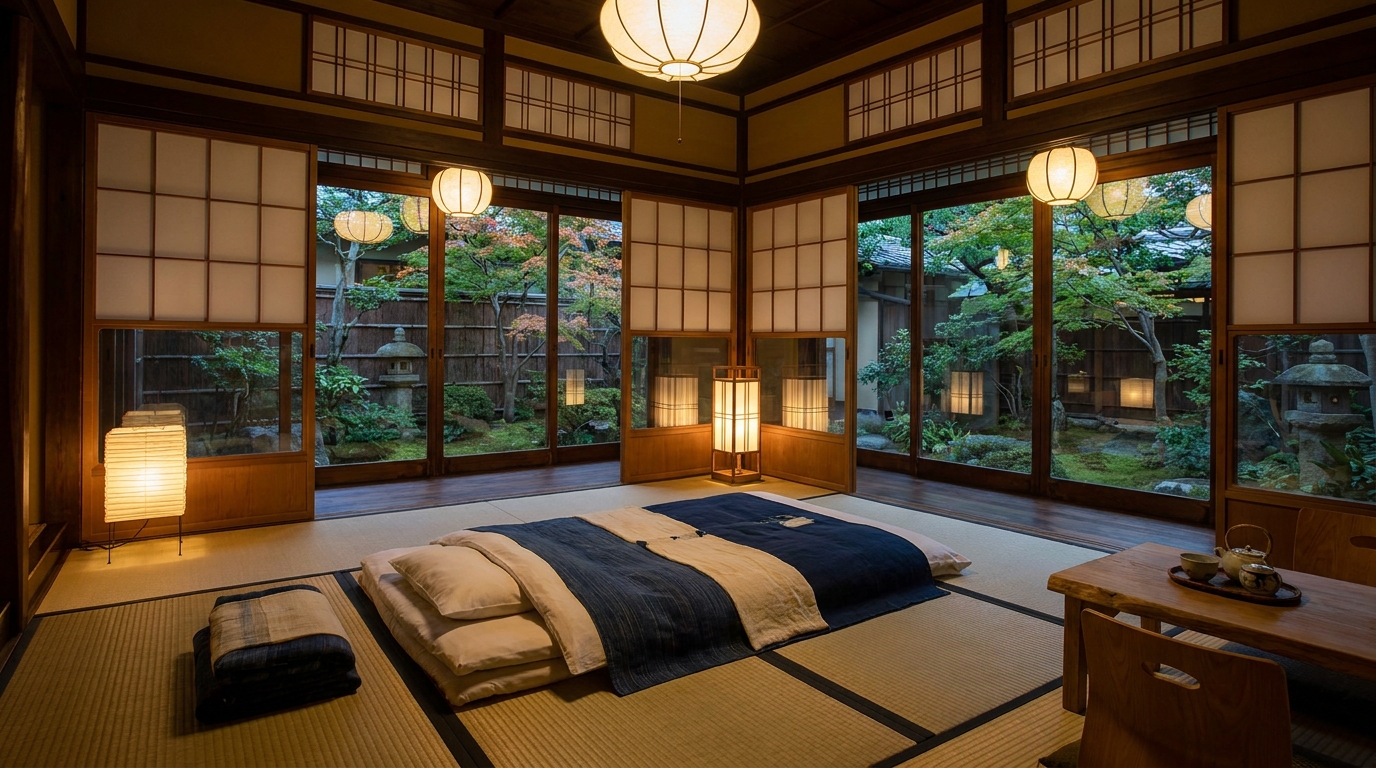
- Yukata (light cotton kimono) for guests to wear around the property
- Slippers and a toiletry kit
- Green tea and wagashi (traditional sweets) on arrival
- Optional or included meals: breakfast (sometimes kaiseki-style), dinner
Not all Tokyo ryokan include meals — check before booking if this matters to you.
Tattoo Policy
Private baths are almost universally tattoo-friendly, since you’re alone in the room. Properties with shared communal baths often have stricter policies — check in advance if this applies to you.
Best Luxury Private Onsen Ryokan in Tokyo
1. Hoshinoya Tokyo (Otemachi) — Best Overall Luxury
Hoshinoya Tokyo is the gold standard for a luxury ryokan experience in central Tokyo — and it does something almost no other city hotel can: it has a genuine natural hot spring on the roof.
The building is a 17-story tower a short walk from Tokyo Station and the Imperial Palace grounds. The design draws on traditional Japanese architecture — woven cedar screens, tatami-floored rooms, sliding shoji panels — but with the quiet precision of a high-end modern hotel. Rooms have private bathrooms (Western-style), though the onsen itself is the rooftop communal bath fed with real hot spring water.
This is where Hoshinoya sits in a different category from the rest of this list: the onsen is shared, not private. But it’s one of the few places in Tokyo where you’re genuinely soaking in natural mineral water — and the rooftop setting above the Tokyo skyline makes it memorable.
Kaiseki dinner and Japanese breakfast are served on-site. The daily “waterside bar” experience — sake and Japanese snacks in the lobby — is a thoughtful touch that makes the whole stay feel curated.
Price range: ¥60,000–¥120,000 per night (breakfast included in most packages)
Location: Otemachi — direct access to the Tokyo Metro, walking distance to Tokyo Station
Best for: Honeymooners, special occasions, travelers who want zero compromise on quality
2. Cyashitsu Ryokan Asakusa — Best Boutique Experience
Cyashitsu (“teahouse”) Ryokan sits in the quieter streets north of Senso-ji Temple, a 10-minute walk from Asakusa Station. The design is built around Japanese teahouse aesthetics — woven cedar ceilings, moss stone paths in the lobby, an atmosphere that slows you down the moment you walk in.
Two suites offer private open-air onsen baths attached to the room: the Cyashitsu Suite (sleeps up to 4) and the Ofuro Suite, which has views of Tokyo Skytree from the bath. For guests in standard rooms, there’s a reservable private outdoor cypress bath on the 6th floor, open 24 hours.
The on-site dining is notably good for a property this size — premium kaiseki meals featuring Matsusaka beef sukiyaki, sea bream, and seasonal sushi courses. Dinner here is genuinely worth staying in for.
Consistently rated 9.7/10 across major booking platforms. In Tokyo’s ryokan scene, that’s rare.
Price range: ¥40,000–¥90,000 per night (suite with private onsen)
Location: Asakusa — 3-minute walk to Asakusa Fujiasama Shrine, 5-minute walk to Senso-ji
Best for: Couples seeking a traditional aesthetic, anyone who wants the private-bath-in-suite experience
Best Private Bath in the Room
3. Prostyle Ryokan Tokyo Asakusa — Best for In-Room Private Bath
If a private bath actually attached to your room is non-negotiable, Prostyle Ryokan Tokyo Asakusa is the most practical answer in Tokyo. Three room categories — Japanese-Style King, Corner Twin, and Suite — come with their own private semi-open-air baths. Each room also has traditional tatami flooring and raised Western-style beds.
The ryokan is in the Hongo/Asakusa area, a neighborhood that still has a working-class Tokyo feel — local izakayas, temples, neighborhood shops. It’s not as polished as Shinjuku or as tourist-central as central Asakusa, but that’s part of the appeal.
With over 2,800 reviews and a consistent 8.9/10 rating, it’s one of the most-reviewed private-bath ryokan in the city. Average room price around ¥30,000 per night makes it considerably more accessible than Hoshinoya.
Price range: ¥25,000–¥55,000 per night
Location: Hongo/Asakusa area — accessible to Senso-ji and Ueno Park
Best for: Travelers who want the in-room private bath experience without paying Hoshinoya prices
4. Onsen Ryokan Yuen Shinjuku — Best Urban Onsen Atmosphere
Yuen Shinjuku is in a different category from the Asakusa cluster: it’s in Shinjuku, which means you’re steps from the world’s busiest train station, yet the ryokan itself is a quiet retreat with a distinctly zen quality.
The highlight is the 18th-floor rooftop open-air bath with views across the Shinjuku skyline. On a clear night, soaking while looking out over the neon shimmer of one of Tokyo’s most electric neighborhoods is a genuinely Tokyo-specific experience you won’t find in Hakone. Private bath sessions can be booked in advance.
The ryokan is about 15 minutes on foot from Shinjuku Station, in a quieter residential pocket — far enough to escape the station chaos, close enough that late-night ramen runs are easy.
Price range: ¥20,000–¥40,000 per night
Location: Shinjuku — 15-minute walk from Shinjuku Station
Best for: Travelers based in Shinjuku, anyone who wants the rooftop-city-onsen experience
Best Value Private Onsen Stays
5. Edo Sakura — Best Affordable Ryokan Experience
Edo Sakura offers one of the most authentic budget ryokan experiences in Tokyo. The standout feature: the shared bath can be reserved for private use for a nominal ¥800 fee — making private soaking accessible even at this price point.
A free daily tea ceremony is included for guests, which for many travelers becomes an unexpected highlight of their Tokyo stay. Service is warm and attentive in a way that punches above its price class.
Price range: ¥7,000–¥14,000 per night
Location: Central Tokyo (accessible)
Best for: Travelers who prioritize service and cultural experience over facilities
Best Family-Friendly Options
6. Ryokan Kamogawa Asakusa — Best for Families
Ryokan Kamogawa sits in the heart of Asakusa, walkable to Senso-ji and the Nakamise shopping street. It’s a mid-range, traditionally styled inn with futon bedding that draws consistently strong praise — particularly for the quality of the futons themselves (a surprisingly important detail in ryokan stays).
The shared bath can be reserved for private use, and the property accommodates children well. Free cultural activities — including tea ceremony and calligraphy — are offered for guests. A solid, honest choice for families wanting a genuine ryokan stay without luxury pricing.
Price range: ¥15,000–¥28,000 per night
Location: Asakusa — 5-minute walk to Senso-ji Temple
Best for: Families, first-timers in Asakusa, travelers who want cultural programming included
Day-Use Private Onsen in Tokyo
Staying overnight isn’t the only option. Several neighborhood sento (public bathhouses) in Tokyo offer private bath reservations without an overnight stay.
Tokyo’s kuroyu sento — the old bathhouses that tap into Tokyo’s distinctive dark mineral water — are genuine hot spring experiences, and some welcome tattoos openly. Neighborhoods like Koenji, Shimokitazawa, and older parts of Asakusa have working sento that are increasingly popular with international visitors.
For a designed bathing experience without a ryokan stay, boutique bathhouses like Kosugiyu (Koenji) and Daikokuyu (Katsushika) offer high-quality soaking in environments that feel thoughtfully crafted.
If You Want the Real Thing: Near-Tokyo Ryokan
I’ll be straightforward: if your main goal is a ryokan with a private natural hot spring bath — the real thing, with mineral water from the earth — staying in Tokyo is a compromise. The better move is a 90-minute trip to Hakone.
- Hakone has the densest concentration of private-onsen ryokan in Japan, with water from multiple mineral sources. *(Full guide coming soon)*
- Nikko offers ryokan with private onsen in a mountain setting less than 2 hours from Tokyo.
- Kyoto has excellent ryokan with private onsen, particularly in Fushimi and the northern districts.
If you’re spending most of your trip in Tokyo, a 2-night side trip to Hakone for the private onsen experience, combined with a ryokan stay in Tokyo for the neighborhood atmosphere, is an ideal combination.
Policies to Check Before You Book
Tattoo policy: Private baths are generally tattoo-friendly by default (you’re alone). Confirm before booking communal baths.
Check-in time: Most ryokan have earlier check-in times than Western hotels (often 3pm or later). Confirm if you’re arriving from an early flight.
Meal inclusion: Some Tokyo ryokan include breakfast; dinner is often optional or extra. Clarify before booking.
Minimum stay: High-end properties like Hoshinoya sometimes require 2-night minimums on weekends.
Cancellation policy: Japanese ryokan often have strict cancellation fees (50–100% within 1–3 days). Book carefully.
FAQ
Are there real onsen in Tokyo?
Technically, very few. Tokyo doesn’t sit on the kind of geothermal geology that produces natural mineral-rich hot spring water. However, kuroyu — dark mineral water found in older neighborhoods — does exist in some sento bathhouses in areas like Asakusa and Shinagawa. Hoshinoya Tokyo brings in genuine hot spring water for its rooftop bath. For a full natural onsen experience, Hakone (90 minutes by train) is the closest reliable option.
What is a ryokan, and how is it different from a regular hotel?
A ryokan is a traditional Japanese inn. Key differences: rooms have tatami-mat flooring and futon bedding (or raised Japanese-style beds in modern properties); yukata (cotton kimono) are provided for guests to wear around the property; communal or private baths are central to the experience; kaiseki-style meals may be included. The service philosophy is omotenashi — anticipating guest needs before they’re expressed.
How much does a ryokan in Tokyo cost?
Budget ryokan start around ¥7,000–¥12,000 per night (Andon, Edo Sakura). Mid-range properties like Prostyle or Kamogawa run ¥15,000–¥35,000. Luxury options like Cyashitsu or Hoshinoya start around ¥40,000 and can reach ¥120,000+ for suites. Most rates include some meals.
Can I stay at a ryokan with tattoos?
For private bath rooms: almost always yes. For communal baths: check each property individually. Tokyo is slightly more relaxed than traditional onsen towns, but policies vary. When in doubt, call ahead.
How far in advance should I book?
Luxury properties (Hoshinoya, Cyashitsu) can sell out 2–3 months ahead for weekends and peak seasons (cherry blossom in March–April, fall foliage in November). Mid-range options like Prostyle are bookable 2–4 weeks out most of the year. Budget properties can often be booked last-minute except during Golden Week (late April–early May) and Obon (mid-August).
Is Asakusa the best neighborhood for ryokan in Tokyo?
For traditional ryokan ambiance, yes — Asakusa still has the old-Tokyo streetscape that makes a ryokan stay feel coherent. It’s also well-positioned for sightseeing (Senso-ji, Ueno, Akihabara). Shinjuku offers better transport access but a less atmospheric setting. Otemachi (Hoshinoya’s location) is best for business travelers or those doing day trips in multiple directions.
Final Thoughts
Private onsen in Tokyo require some realistic expectations — but the best properties here offer something genuinely worth experiencing: the combination of ryokan hospitality, traditional aesthetics, and a private bathing experience in one of the world’s great cities.
My honest recommendation: If your budget allows, Hoshinoya Tokyo or Cyashitsu Ryokan Asakusa deliver an experience you won’t find anywhere else. If you want in-room private bath at a more accessible price, Prostyle Ryokan Asakusa is the most reliable option. And if the real onsen experience is what you’re after, build a Hakone night into your itinerary — it’s one of the best decisions you’ll make in Japan.