Japan travel professional with 15+ years of industry experience, including senior roles at major Japanese travel companies and media. Every recommendation in this guide is based on firsthand knowledge. We are never paid directly by hotels to feature them.
Kyoto is where Japan makes the most sense. The ancient capital for over a thousand years, it’s the city where traditional culture didn’t just survive modernization — it thrived alongside it. Wooden machiya townhouses sit beside contemporary cafes. Monks walk the same stone paths as tour groups. And beneath it all, one of the world’s great bathing cultures quietly goes about its business.
After 15+ years working in Japan’s travel industry, I’ve helped hundreds of travellers plan Kyoto trips. This guide covers everything: where to stay, what to do, how to get there, and how to make the most of a city that rewards planning more than almost anywhere else in Japan.
Disclosure: Some links in this article are affiliate links. If you book through them, I earn a small commission at no extra cost to you. All recommendations are based on industry knowledge and firsthand research — no paid placements, ever.
Quick Picks
| Category | Pick | Link |
|---|---|---|
| 🏆 Best Ryokan (Overall) | Tawaraya | Check availability on Agoda
 |
| 💴 Best Value Hotel | Good Nature Hotel Kyoto | Check availability on Agoda
|
| 🛁 Best Private Onsen Ryokan | Suiran, Arashiyama | Check availability on Agoda
 |
| 🎯 Must-Do Activity | Fushimi Inari dawn hike | |
| 🍵 Best Cultural Experience | Tea ceremony in Gion |
Best Areas to Stay in Kyoto
Kyoto’s neighborhoods feel radically different from each other. Getting this decision right shapes your entire trip.
| Area | Best For | Vibe |
|---|---|---|
| Downtown (Kawaramachi/Shijo) | First-timers, flexibility | Central, walkable, great transport |
| Gion / Higashiyama | Atmosphere, splurge stays | Traditional lanes, geisha district |
| Kyoto Station Area | JR Pass holders, day-trippers | Practical, zero atmosphere |
| Arashiyama | Nature lovers, ryokan immersion | Bamboo groves, riverside tranquility |
| Nijo Castle Area | Quiet central base | Less touristy, easy access |
Downtown Kyoto (Kawaramachi/Shijo) — Best for First-Timers
The commercial and culinary heart of Kyoto. You’re walking distance from Gion, Nishiki Market, the Kamo River, and Pontocho Alley, with excellent train connections for day trips in every direction. For most first-time visitors, this is the right base.
Top picks: The Ritz-Carlton Kyoto (riverfront luxury), Ace Hotel Kyoto (design-forward), Good Nature Hotel (best value)
Gion / Southern Higashiyama — Best for Atmosphere
Stone-paved lanes, traditional machiya townhouses, the chance of spotting a maiko at dusk. Staying here is the “classic Kyoto” experience. Hotels and ryokans here tend to be either budget guesthouses or world-class luxury — there’s less in between.
Top picks: Four Seasons Hotel Kyoto, Park Hyatt Kyoto, Hotel The Celestine Kyoto Gion
Arashiyama — Best for Ryokan & Nature
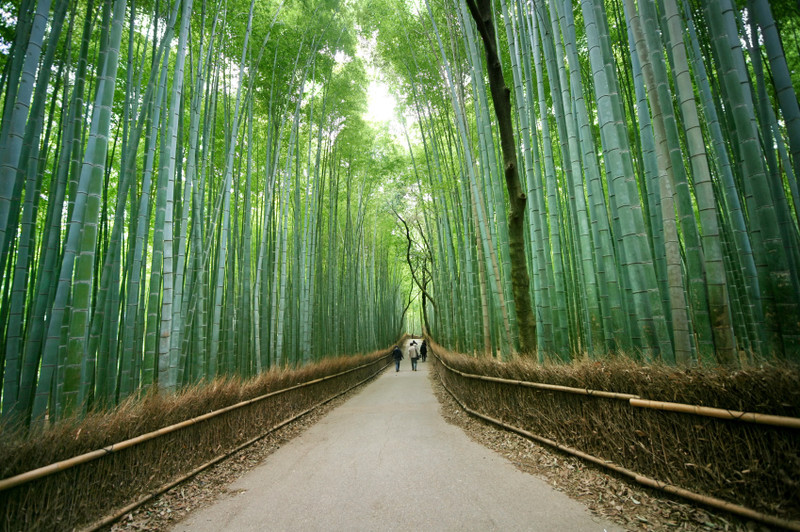
Bamboo groves, the Oi River, Tenryu-ji garden. Staying here is a retreat — you’re 30–40 minutes from central Kyoto by train, but the payoff is extraordinary. Best for second-time visitors or anyone whose priority is a luxury ryokan in nature.
Top picks: Muni Kyoto, Hoshinoya Kyoto, Suiran (Luxury Collection)
👉 Full area-by-area guide with hotel picks: Where to Stay in Kyoto for First-Timers
Top Things to Do in Kyoto
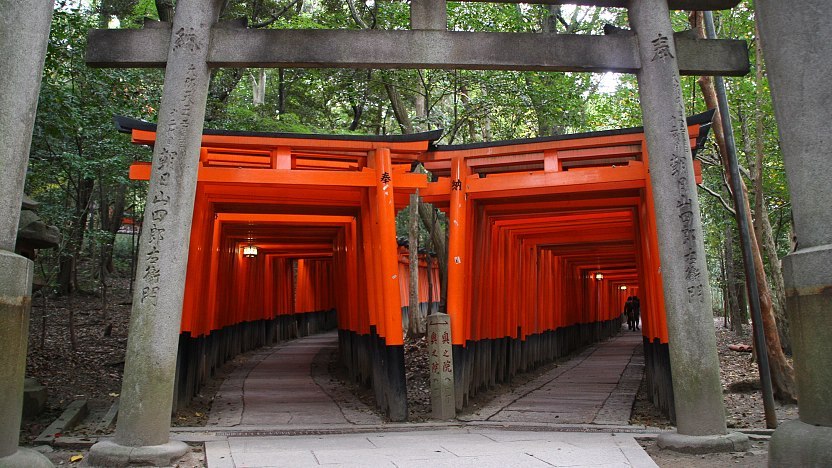
1. Fushimi Inari Shrine — Dawn Hike (Must-Do)
Ten thousand vermilion torii gates winding up a forested mountain. One of the most photographed sights in Japan — and genuinely deserving of the attention. The key is timing: arrive before 7am and you’ll have the lower gates almost to yourself. The full mountain loop takes 2–3 hours; the inner gates area (30–45 minutes) is enough for most visitors.
It’s free to enter, open 24 hours, and 15–20 minutes from central Kyoto by JR Nara Line.
2. Arashiyama Bamboo Grove & Tenryu-ji
The bamboo grove is everything the photos suggest — and it’s best in early morning before the tour buses arrive. Combine with Tenryu-ji temple garden (a UNESCO World Heritage Site) and the Oi River walk. Allow 2–3 hours for the area. Getting there: Sagano Line to Saga-Arashiyama station, or Hankyu Arashiyama line.
3. Kinkaku-ji (Golden Pavilion)
The gold-leaf-covered Zen temple reflected in its mirror pond is one of Japan’s most iconic images. Crowds are significant from 9am onwards — arrive at opening (9am sharp) to minimize queues. Budget 45–60 minutes. Admission: ¥500. 30 minutes by bus from central Kyoto.
4. Gion Evening Walk
Gion is best experienced on foot at dusk — the stone-paved Hanamikoji Street and Ninenzaka laneway come alive in the late afternoon light. Walk from Gion-Shijo station south along Hanamikoji, then continue up through Ninenzaka and Sannenzaka. Budget 90 minutes. The chance of spotting a geisha (or maiko, apprentice geisha) is real — they move quickly and discreetly, especially near Ichiriki Ochaya on Hanamikoji.
5. Kiyomizu-dera Temple
The wooden stage of Kiyomizu-dera, jutting out over a forested hillside, is one of Japan’s great architectural achievements. Built without a single nail. The surrounding Higashiyama area — Ninenzaka and Sannenzaka stone paths — is Kyoto at its most photogenic. Go early (before 8:30am for the quietest experience) or in the evening when illuminations are on (seasonal).
6. Tea Ceremony
A 1–2 hour experience in a traditional tea house: learn the art of matcha preparation from a certified teacher. Available throughout Kyoto, with particular concentrations in Gion and near the major temples. One of the most memorable cultural experiences Japan offers.
7. Nishiki Market
A narrow, 400-meter covered market known as “Kyoto’s Kitchen” — 100+ vendors selling pickled vegetables, fresh tofu, grilled skewers, matcha sweets, and local specialties. Best visited in the morning when it’s less crowded. Located in central Kyoto, 5 minutes from Kawaramachi station.
8. Kimono Rental in Gion
Walk the stone paths of Higashiyama in a rented kimono — most rental shops include dressing assistance and a hairstyle option. The combination of the costume and the setting is genuinely immersive. Rentals typically run ¥3,000–¥6,000 for a half-day.
Ryokans in Kyoto: The Essential Experience
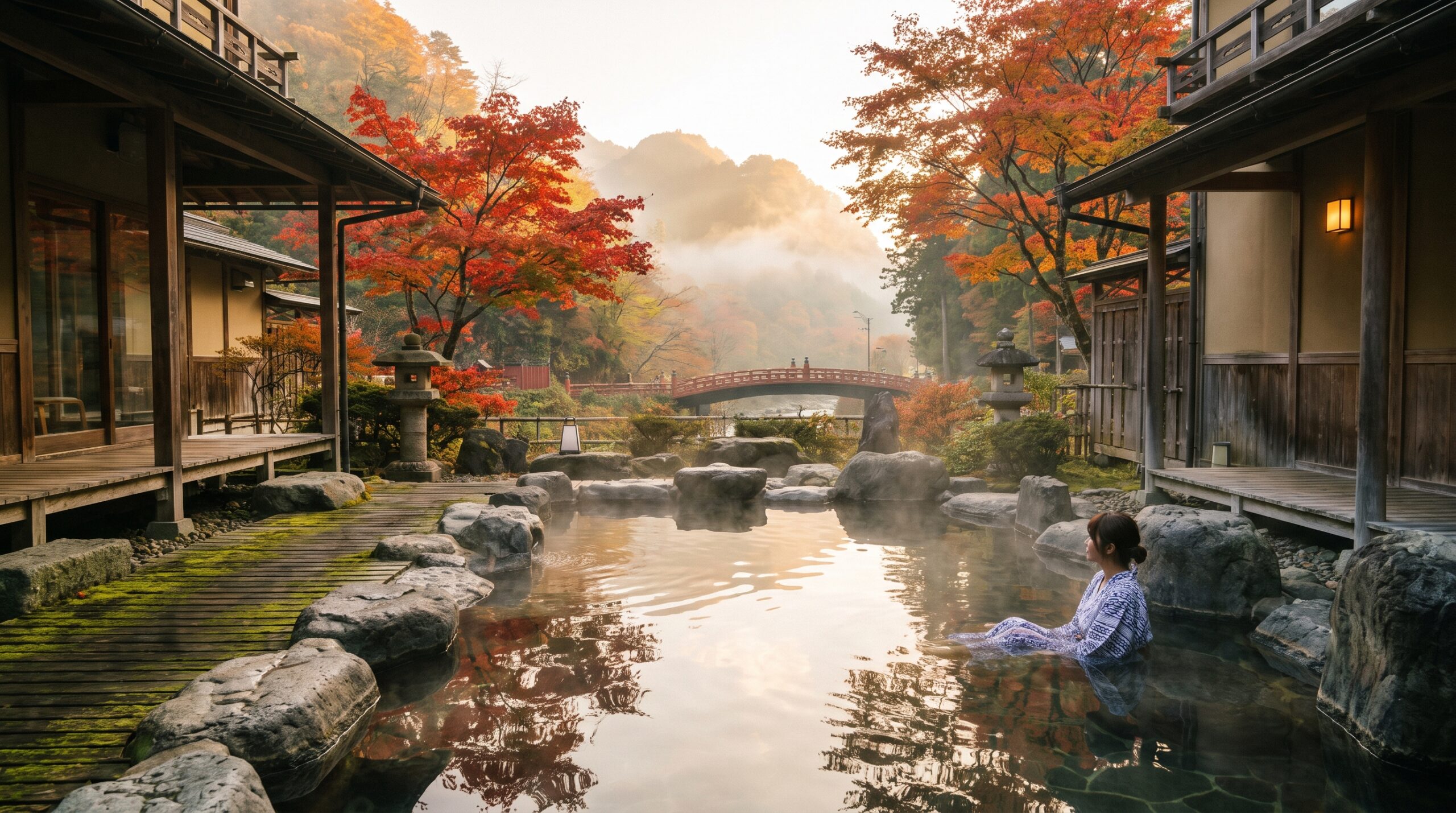
A ryokan stay in Kyoto — tatami floors, kaiseki dinner, yukata robe, private onsen — is one of the great travel experiences of Japan. Kyoto has a higher concentration of excellent ryokans than any other city in the country.
Top Ryokan Picks
Luxury:
- Tawaraya — Japan’s most famous ryokan. Invitation-only for new guests; worth every effort to book. Check availability on Agoda
- Hiiragiya — Founded 1818, family-run, Tawaraya’s closest rival. Check availability on Agoda

- Hoshinoya Kyoto — Boat-access only, modern Japanese luxury in Arashiyama. Check availability on Agoda
Mid-range:
- Seikoro Ryokan — Best mid-range pick; 130+ years old, near Kyoto Station. Check availability on Agoda
- Gion Yoshiima — Right in the heart of the geisha district. Check availability on Agoda
Budget:
- Matsubaya Ryokan — Family-run, welcoming to foreign guests, near Kyoto Station. Check availability on Agoda

👉 Full guide with 15+ picks by price category: Best Ryokans in Kyoto
Onsen in Kyoto
Kyoto’s city center has limited natural hot spring water due to its geology — but there are excellent onsen experiences within 30–60 minutes of the center.
Best options:
- Kurama Onsen — 30 min north by Eizan Railway; genuine natural spring, forested mountain setting
- Arashiyama area — Several ryokans draw spring water from the Yunohana source
- Funaoka Onsen — Historic 1920s sento in central Kyoto; not a true onsen but a genuine cultural experience
👉 Full guide to hot springs in and around Kyoto: Kyoto Onsen Guide
Private Onsen in Kyoto
If a private bath is a priority — especially for couples, honeymooners, or tattooed guests — Kyoto has options at every budget.
Top picks:
- HOTEL THE MITSUI KYOTO — One of the few central Kyoto properties with certified natural hot spring water in-room Check availability on Agoda

- Suiran, Arashiyama — Natural spring water, riverside setting, Marriott Luxury Collection Check availability on Agoda
- Nazuna Kyoto — Tattoo-friendly, design-forward, Shigaraki ceramic tubs Check availability on Agoda

For day-use private baths (no overnight stay required), Arashiyama Kadensho and Kyo Yunohana Resort Suisen both offer kashikiri reservations.
👉 Full guide to private onsen ryokans: Best Kyoto Ryokan with Private Onsen
👉 Day-use & kashikiri options: Private Onsen in Kyoto: Day-Use Guide
How to Get to Kyoto
From Tokyo — Shinkansen (Recommended)
Tokaido Shinkansen from Tokyo Station to Kyoto Station: 2 hours 15 minutes on the Nozomi (non-JR Pass), or 2 hours 40 minutes on the Hikari (JR Pass valid). Cost: ~¥13,900 one way (Nozomi, unreserved).
From Osaka — 15 Minutes
Tokaido Shinkansen from Shin-Osaka: 15 minutes. Or Hankyu/Keihan limited express from Osaka: 30–40 minutes and significantly cheaper (~¥400 vs ¥1,420 Shinkansen).
From Kansai International Airport (KIX)
Haruka Express (JR): 75–80 minutes direct to Kyoto Station. ~¥3,690. JR Pass holders: covered.
Bus: Several highway bus options from KIX; 90–100 minutes depending on traffic.
From Nara
JR Nara Line: 45 minutes, ~¥720. Kintetsu Kyoto Line: 35 minutes, ~¥760. Easy half-day in either direction.
Getting Around Kyoto
On foot: The best way within sightseeing clusters. Gion to Kiyomizu-dera: 15 minutes. Ninenzaka to Yasaka Shrine: 5 minutes.
Subway: Karasuma Line (north-south) and Tozai Line (east-west). Fast and reliable but doesn’t reach all attractions.
Bus: Covers the whole city. Can be very crowded during peak seasons (cherry blossom, autumn foliage). IC card (Suica/ICOCA) recommended.
Taxi: Reliable, expensive. Good for groups of 3–4 when buses are slow.
Day trips from Kyoto: Nara (45 min), Osaka (30 min), Hiroshima (1h45 by Shinkansen)
Day Trip or Overnight in Kyoto?
| Day Trip from Osaka/Tokyo | 2–3 Nights | 4–5 Nights | |
|---|---|---|---|
| Kinkaku-ji | ✅ | ✅ | ✅ |
| Fushimi Inari | ✅ early start | ✅ | ✅ |
| Arashiyama | ✅ | ✅ | ✅ |
| Gion evening walk | ❌ (timing hard) | ✅ | ✅ |
| Ryokan experience | ❌ | ✅ | ✅ |
| Day trip to Nara | ❌ | ✅ | ✅ |
| Lesser-known temples | ❌ | ❌ | ✅ |
My honest verdict: 3 nights is the sweet spot for a first visit. Two nights leaves you feeling rushed; four nights lets you breathe. A day trip from Osaka is possible for the main sights, but you’ll miss the evening atmosphere and the ryokan experience entirely.
When to Visit Kyoto
| Season | Highlights | Watch Out For |
|---|---|---|
| Spring (late Mar–Apr) | Cherry blossoms | Biggest crowds of the year; book 3–6 months ahead |
| Golden Week (late Apr–early May) | Long holiday | Extremely crowded; avoid if possible |
| Early Summer (Jun) | Hydrangeas, lush greenery | Rainy season; humidity |
| Summer (Jul–Aug) | Gion Matsuri (July) | Hot and humid; fewer foreign tourists |
| Autumn (mid-Nov) | Maple foliage | Peak crowds rivaling spring; book early |
| Winter (Dec–Feb) | Snow on temples, quietest season | Cold; some reduced hours |
Best kept secret: Winter. Snow on Kinkaku-ji or the stone paths of Higashiyama is stunning, prices drop, and you can actually hear yourself think. Our personal recommendation for first-timers with flexible schedules.
Kyoto 3-Day Itinerary
Day 1 — Eastern Kyoto
- 8:00 — Kiyomizu-dera (before the crowds)
- 10:00 — Ninenzaka & Sannenzaka stone paths
- 12:00 — Lunch in Gion
- 14:00 — Yasaka Shrine + Maruyama Park
- 17:00 — Gion evening walk (Hanamikoji Street)
- 19:00 — Dinner in Pontocho Alley
Day 2 — Western Kyoto
- 7:00 — Arashiyama Bamboo Grove (early, before crowds)
- 8:30 — Tenryu-ji garden
- 10:30 — Oi River walk + Togetsukyo Bridge
- 13:00 — Lunch in Arashiyama
- 15:00 — Kinkaku-ji (Golden Pavilion)
- 17:30 — Nishiki Market
- Evening — Check into ryokan; kaiseki dinner
Day 3 — Central & Southern Kyoto
- 6:00 — Fushimi Inari dawn hike
- 9:00 — Return to hotel; Japanese breakfast
- 11:00 — Tea ceremony or kimono rental in Gion
- 14:00 — Nijo Castle
- 16:00 — Philosopher’s Path (spring: cherry blossoms; autumn: foliage)
- 18:00 — Departure or evening at leisure
FAQ
How many days do you need in Kyoto?
3–4 nights is ideal for a first visit — enough to cover the main sights without feeling rushed. 2 nights is doable but tight. 5+ nights lets you explore deeper: Ohara, Kurama, lesser-known temples, a day trip to Nara.
Is Kyoto expensive?
It depends entirely on your choices. Budget travel (hostels, set-lunch menus, public transport) is very possible at ¥8,000–¥12,000 per day. Mid-range (decent hotel, one restaurant dinner per day) runs ¥20,000–¥35,000 per day. A luxury ryokan experience adds ¥50,000–¥150,000+ per person per night.
What is the best area to stay in Kyoto?
For most first-timers: Downtown Kawaramachi. Central, walkable, well-connected. If atmosphere matters more than convenience, Gion/Higashiyama is the more memorable choice. For a full ryokan immersion in nature, Arashiyama. See our full guide: Where to Stay in Kyoto.
Can you day trip to Kyoto from Tokyo?
Technically yes — Shinkansen gets you there in 2h15min. But a day trip leaves little time for the real Kyoto: the evening atmosphere in Gion, a ryokan stay, the early-morning quiet at Fushimi Inari. If you can, stay at least 2 nights.
Is Kyoto or Tokyo better for ryokan stays?
Kyoto, without question. Tokyo has ryokans, but the setting — stone-paved lanes, temple districts, mountain villages — makes the Kyoto ryokan experience what it is. See our guide: Best Ryokans in Kyoto.
Do Kyoto ryokans allow tattoos?
Communal baths typically prohibit tattoos. Properties with private in-room baths (rotenburo) or kashikiri reserved baths are more accommodating. The Nazuna group explicitly welcomes tattooed guests. Details: Best Kyoto Ryokan with Private Onsen.
How do I get from Tokyo to Kyoto?
Shinkansen from Tokyo Station to Kyoto Station: 2h15min (Nozomi) or 2h40min (Hikari, JR Pass valid). Most convenient and fastest option by far.
What is Kyoto known for?
Kyoto is Japan’s ancient imperial capital — home to 17 UNESCO World Heritage Sites, over 1,600 Buddhist temples, 400 Shinto shrines, and the world’s greatest concentration of traditional Japanese architecture. It’s best known for Fushimi Inari, Kinkaku-ji, Arashiyama, the geisha district of Gion, and its ryokan and onsen culture.
Final Word
Kyoto is the city most people imagine when they think of Japan — and it exceeds those expectations when you give it proper time. Three nights, an early start at Fushimi Inari, one evening in Gion at dusk, and one night in a ryokan. That’s the minimum. Everything after that is gravy.
Plan early for peak seasons. Book your ryokan first — before your flights, if possible. And leave Tokyo before 8am to make the most of the day.
Written by a Japan travel professional with 15+ years of experience across major Japanese travel companies and media. All recommendations are based on industry expertise and firsthand research — never paid placements.