Japan travel professional with 15+ years of industry experience, including senior roles at major Japanese travel companies and media. Every recommendation in this guide is based on firsthand knowledge. We are never paid directly by hotels to feature them.
Planning to soak in a traditional Japanese hot spring during your Kyoto trip? Here’s what you need to know first: Kyoto city center has very few true onsen due to its geological makeup. Most bathhouses within the city are sento — heated public baths that don’t use natural spring water.
That’s not a reason to skip the experience. It’s a reason to plan smarter.
In this guide, I’ll walk you through the best genuine onsen experiences within reach of Kyoto — from day-use hot spring facilities to overnight ryokan stays. As someone who’s worked in Japan’s travel industry for over 15 years, I’ll give you an honest picture of what each option actually delivers.
- TL;DR — Quick Picks
- The Honest Reality: Kyoto Onsen vs. Sento
- Onsen Etiquette: What You Need to Know Before You Go
- True Onsen Near Kyoto: Day-Use Options
- Sento Worth Visiting in Kyoto City
- Overnight Onsen Ryokan Near Kyoto
- Tattoo-Friendly Onsen in Kyoto
- When to Visit: Best Seasons for Kyoto Onsen
- Day Trip vs. Overnight Stay: Which Should You Choose?
- How to Get to Kurama from Kyoto
- FAQ
- Where to Stay in Kyoto
- Final Thoughts
TL;DR — Quick Picks
| Best For | Pick | Link |
|---|---|---|
| **Best Overall (Ryokan + Onsen)** | Kyo Yunohana Resort Suisen | Check availability on Agoda
 |
| **Best Near Kyoto City (Day Use)** | Kurama Onsen | Check official page |
| **Best Luxury Onsen Ryokan** | Arashiyama Onsen Hanaikada | Check availability on Agoda
 |
| **Best Budget Day Bath** | Funaoka Onsen (sento) | Walk-in only |
| **Best Private Bath (Couples/Tattoos)** | Kadensho (Arashiyama) | Check availability on Agoda
 |
The Honest Reality: Kyoto Onsen vs. Sento
Before diving in, let’s clear up a common confusion that trips up a lot of visitors.
Onsen (温泉) is geothermally heated natural spring water containing at least one of 19 designated minerals. To call itself an onsen, a facility must meet strict legal standards in Japan.
Sento (銭湯) is a public bathhouse using heated tap or groundwater. They’re found throughout urban Kyoto and are a wonderful cultural experience — but they’re not hot springs in the traditional sense.
Kyoto is surrounded by mountains but sits on a geological basin that limits natural spring activity. The city’s bathing culture has thrived for centuries through sento, and many of Kyoto’s historic public baths are genuinely worth visiting. However, if you want a true mineral-rich hot spring soak, you’ll need to head to the outskirts — places like Kurama, Arashiyama’s Yunohana area, or Ohara.
My honest take: Most visitors won’t notice the difference once they’re soaking in a well-run facility. But knowing the distinction helps you choose the right experience for your priorities.
Onsen Etiquette: What You Need to Know Before You Go
Japanese hot spring culture has a set of unwritten rules. Follow these and you’ll have no problems.
1. Wash before you enter. Every onsen and sento has a shower area before the communal baths. Scrub thoroughly — this is non-negotiable.
2. No swimwear. Everyone enters the baths nude. Towels are fine for modesty while walking, but keep them out of the water.
3. Keep your hair up. Long hair must be tied back and must not touch the bathwater.
4. No phones. Devices are forbidden in all bathing areas. Leave yours in the locker.
5. Tattoo policy. This is the big one for foreign visitors. Many traditional Japanese onsens prohibit visible tattoos due to their historical association with the yakuza. Small, easily coverable tattoos can often be wrapped with a waterproof bandage. If you have extensive ink, look specifically for tattoo-friendly facilities or book a private bath (kashikiri).
True Onsen Near Kyoto: Day-Use Options
1. Kurama Onsen — Best Day-Trip Onsen from Kyoto City
Distance: About 30 minutes from central Kyoto via Eizan Railway to Kurama Station.
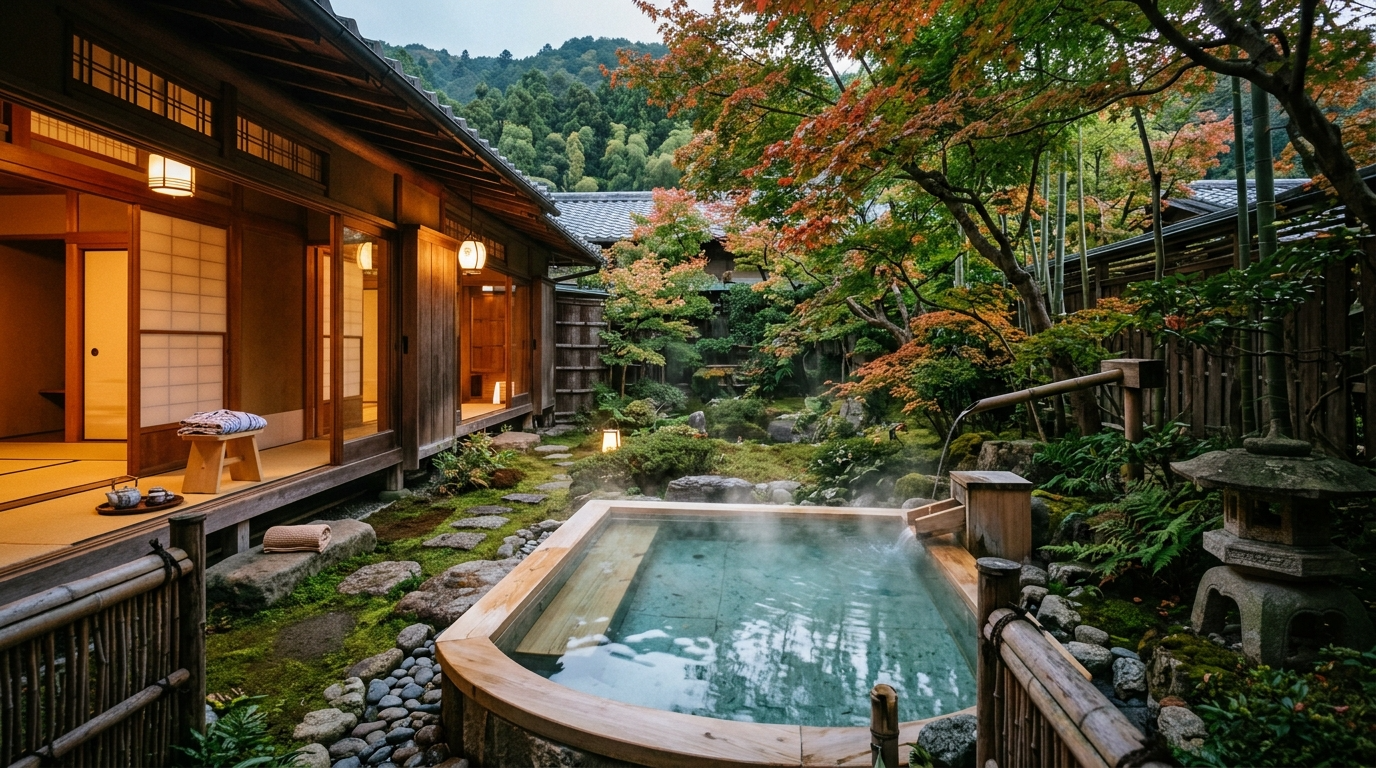
Kurama Onsen is the go-to recommendation for visitors who want a proper hot spring day trip. Set in the forested mountains north of Kyoto, the outdoor baths (rotenburo) overlook lush cedar forests and are particularly spectacular in autumn when the hillsides turn red and orange.
The spring water here is a sodium bicarbonate type, known in Japan for its skin-softening properties. It feels noticeably silky — the kind of water quality you don’t find in urban sento.
After your soak, combine it with a hike up to Kurama Temple, one of Kyoto’s more mystical and less-crowded sacred sites. It’s a full day well spent.
- Outdoor bath only: ¥1,000 adults / ¥700 children (4–12)
- Indoor + outdoor bath set: ¥2,500 adults (includes towels and yukata)
- Hours: 10:00am – 9:00pm daily
- Access: 10-minute walk from Kurama Station, or free shuttle
2. Sagano Onsen Tenzan-no-yu — Best Near Arashiyama
Distance: Near Arashiyama, western Kyoto. About 20 minutes by taxi from the city center.
Tenzan-no-yu is a large, well-run spa facility drawing spring water from 1,200 meters underground — rich in sodium and calcium, excellent for skin. It’s a smart combination of authentic onsen water with urban accessibility.
The outdoor baths are the highlight; the indoor baths use heated water rather than spring water, so opt for the rotenburo experience. There’s also a sauna where attendants regularly perform aufguss (water-pouring ceremonies with essential oils), a restaurant, and comfortable lounging areas.
- Admission: ¥1,050 adults / ¥500 children
- Towel set: Additional ¥200–350
- Hours: 10:00am – 1:00am (last entry midnight)
- Closed: 3rd Monday of each month
3. Kyo Yunohana Onsen — Best Full Onsen Resort Near Kyoto
Distance: About 40 minutes west of Kyoto (Kameoka area), accessible by JR San’in Line.
Yunohana Onsen is one of the oldest hot spring areas in the Kyoto region, with a history stretching back over 1,200 years. The spring water here is sodium chloride type — warming and good for circulation, often used for joint and muscle recovery in traditional Japanese medicine.
Several ryokan operate in this area, and Kyo Yunohana Resort Suisen is consistently rated among the best by both Japanese and international guests (9.6/10 on Agoda). They provide a free shuttle from the nearest train station.
Check availability on Agoda
Sento Worth Visiting in Kyoto City
If you’re staying in central Kyoto and want to experience the local bathing culture without traveling far, these historic sento are genuinely worth a visit — even if they’re not natural hot springs.
4. Funaoka Onsen — Most Historic Bathhouse in Kyoto
Funaoka Onsen, in the Kita Ward, is the bathing equivalent of a living museum. Operating since the 1920s, it became famous in 1933 as the site of Japan’s first denkiburo (electric bath) — a mild-current bath said to improve circulation and relieve muscle pain.
The interior is extraordinary: intricate carved ceilings, green tiles, and an atmosphere preserved from pre-war Kyoto. Locals have bathed here for generations, and the communal vibe is genuine and welcoming.
Note: towels, shampoo, and body soap are not provided — bring your own or purchase on-site.
- Admission: Around ¥500–600 (current city rate)
- Hours: Mon–Sat 3:00pm – 1:00am; Sunday 8:00am – 1:00am
5. Gokouyu — For the Full Bathing Experience
Celebrating its 90th anniversary in 2024, Gokouyu in Sakyo Ward offers an unusually diverse array of baths for a sento: radium mineral baths, electric baths, herbal medicinal baths, and a unique ganbanyoku (bedrock bath) where you lie on heated natural stones.
If you want to experience multiple types of Japanese therapeutic bathing in one place without leaving the city, this is the best option.
- Hours: Weekdays 2:30pm – 12:30am; Sunday 7:00am – midnight
- Closed: Mondays and 3rd Tuesday of the month
Overnight Onsen Ryokan Near Kyoto
For the full traditional Japanese experience — hot spring bath, kaiseki dinner, futon bed, yukata robe — an overnight ryokan stay is unbeatable. Here are the best options within reach of Kyoto.
6. Arashiyama Onsen Hanaikada — Best Overall Ryokan Onsen Stay
Hanaikada sits right on the Oi River near Togetsu-kyo Bridge in Arashiyama, and it’s one of the most photographed ryokan settings in Japan. The baths are the main attraction: private open-air baths (kashikiri rotenburo) with views of the bridge and Mount Atago, plus gender-separated panoramic public baths — the only ones of their kind in Arashiyama.
The indoor baths are crafted from Japanese cypress (hinoki); the outdoor baths use bamboo that blends into the surrounding landscape. If you can only do one overnight ryokan stay in the Kyoto area, this is a serious contender.
Book well in advance — usually at least a week ahead, often more during peak seasons (March–May, October–November).
Check availability on Agoda
7. Arashiyama Onsen Kadensho — Best for Private Onsen Access
Kadensho, located right in front of Hankyu Arashiyama Station, offers five private hot spring baths in addition to public baths. The spring water is known for relieving muscle and nerve pain and promoting skin health.
The no-nakai (no attending staff) policy gives guests more privacy during their stay — a detail many international visitors actually appreciate. The tradeoff is that you handle more yourself, but the trade feels fair given the facilities.
Demand is very high; booking a month in advance is often necessary.
Check availability on Agoda
8. Ohara Onsen (Yumoto Onsen Oharasansou) — Most Tranquil
Ohara is a mountain village about an hour north of Kyoto that feels entirely removed from the city’s tourist crowds. Sanzen-in Temple is the main draw, but the area’s small cluster of ryokan offers onsen experiences of genuine mountain quietude.
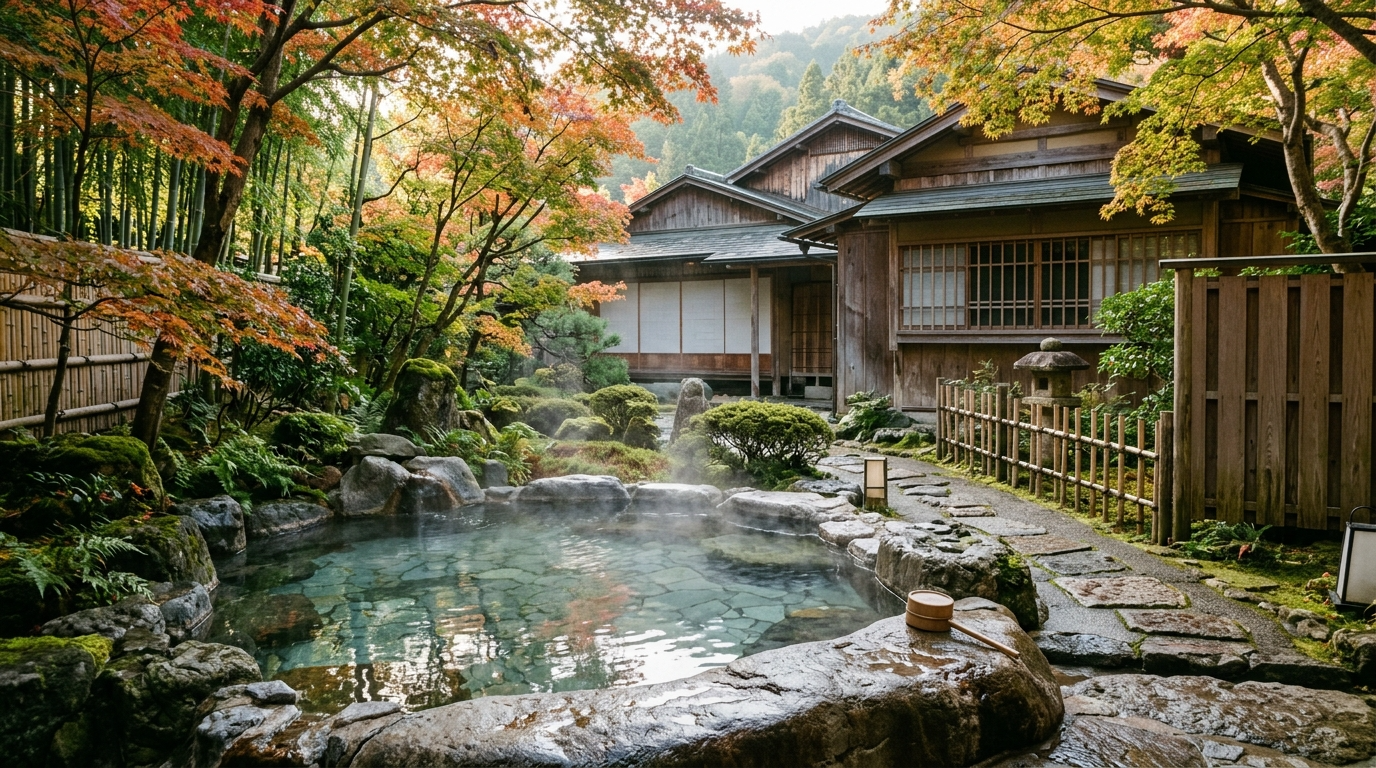
Yumoto Onsen Oharasansou is the standout property here — indoor and outdoor baths, authentic seasonal kaiseki cuisine, and the chance to wake up surrounded by forested mountains. In autumn, the hillsides visible from the outdoor baths turn brilliant red and orange.
Check availability on Agoda
9. Sumiya Kiho-an — Best Luxury Option in Kyoto City
For those who want to stay close to central Kyoto and still access quality onsen facilities, Sumiya Kiho-an is the highest-rated luxury ryokan in the city with hot spring baths. At around $585/night on average, it’s a significant investment — but it’s the best answer to “how do I get the full ryokan-onsen experience without leaving Kyoto?”
Check availability on Agoda
10. Kyo Yunohana Resort Suisen — Best Value Onsen Resort
Already mentioned above, but worth repeating here for those choosing between day-use and overnight. Suisen consistently scores above 9.5 on major booking platforms and offers free shuttles from the station. If you want the best bang-for-yen in genuine onsen resort accommodation near Kyoto, this is the call.
Check availability on Agoda
Tattoo-Friendly Onsen in Kyoto
This is one of the most common questions from international visitors. Here’s the honest answer:
Most traditional onsens in Japan do not allow visible tattoos. The policy stems from Japan’s decades-long association between tattoos and organized crime, and while attitudes are slowly shifting, enforcement remains common at ryokan and traditional facilities.
Your practical options:
- Book a private bath (kashikiri) — almost any ryokan will rent a private bath by the hour to guests. This sidesteps the policy entirely.
- Use a waterproof bandage for small, easily covered tattoos. Some facilities are lenient with this approach if the tattoo is minor.
- Choose tattoo-friendly facilities explicitly — look for listings that advertise irezumi OK or tattoo friendly. The Navitime Japan Travel Guide lists several options in the Kyoto area.
Private bath options: Kadensho (Arashiyama), Hanaikada (private baths available to guests), most Yunohana ryokan.
When to Visit: Best Seasons for Kyoto Onsen
| Season | Verdict |
|---|---|
| **Spring (March–May)** | Peak season — cherry blossoms + onsen is spectacular, but book months ahead |
| **Summer (June–August)** | The combo of humid Kyoto summer + outdoor onsen is surprisingly refreshing at night |
| **Autumn (Oct–Nov)** | My personal favorite. The foliage visible from outdoor baths at Kurama and Ohara is extraordinary |
| **Winter (Dec–Feb)** | Off-peak pricing, fewer crowds, snow on mountain baths if you’re lucky |
Day Trip vs. Overnight Stay: Which Should You Choose?
Day trip makes sense if:
- You’re in Kyoto for 1–2 days and have a full itinerary
- Budget is tight (day-use onsen = ¥1,000–2,500 vs. ¥30,000+ for ryokan)
- You just want to try the experience once
→ Best day-trip pick: Kurama Onsen (most atmospheric, true hot spring water, great hiking combo)
Overnight stay makes sense if:
- You have 3+ days in the Kyoto area
- The ryokan experience (kaiseki, yukata, futon) is on your Japan wish list
- You want to access outdoor baths at dawn or late night, when they’re at their best
→ Best overnight pick: Hanaikada (Arashiyama) for the setting, or Kyo Yunohana Suisen for value.
How to Get to Kurama from Kyoto
The most popular day-trip onsen is easy to reach:
- From Demachiyanagi Station (north Kyoto), take the Eizan Railway Kurama Line directly to Kurama Station — about 30 minutes, ¥430 one way.
- From Kurama Station, it’s a 10-minute walk to the onsen, or take the free shuttle.
Combine with a visit to Kurama Temple (a 30-minute hike up the mountain from the village) for a full half-day experience.
FAQ
Does Kyoto have good onsen?
Kyoto’s city center has limited natural hot springs due to its geography, but there are excellent onsen experiences within 30–60 minutes of central Kyoto — particularly at Kurama, Yunohana, Arashiyama, and Ohara. Many top ryokan in the area pipe in spring water from these sources.
What is the difference between onsen and sento in Kyoto?
Onsen uses natural geothermal spring water meeting strict mineral content standards. Sento uses heated tap or groundwater. Kyoto is famous for its historic sento culture, but true onsen require going to the outskirts. Both offer excellent bathing experiences — the distinction matters mainly if you want specific therapeutic minerals.
Can tourists use onsen in Kyoto?
Yes, absolutely. Many facilities in and around Kyoto cater specifically to international visitors. Kurama Onsen, Tenzan-no-yu, and most Arashiyama ryokan welcome foreign guests. The main thing to know: bathing suits are not permitted, and tattoo policies vary by facility.
How much does it cost to visit an onsen in Kyoto?
Costs vary widely:
- Historic sento (Funaoka, Gokouyu): ¥500–800
- Day-use onsen facilities: ¥1,000–2,500
- Private bath rental at ryokan: ¥3,000–8,000 per session
- Overnight ryokan with onsen: ¥20,000–100,000+ per person (usually including meals)
Do Kyoto onsen allow tattoos?
Most traditional facilities do not. Your best options are: booking a kashikiri (private bath), choosing tattoo-friendly facilities explicitly, or covering small tattoos with a waterproof bandage. The Arashiyama Kadensho and several Yunohana ryokan have private bath options suitable for tattooed guests.
How far is Kurama Onsen from Kyoto?
About 30 minutes by Eizan Railway from Demachiyanagi Station (north Kyoto) to Kurama Station. From there, it’s a 10-minute walk or free shuttle to the onsen entrance.
Where to Stay in Kyoto
If you’re still deciding where to base yourself in Kyoto, our full guide to the best areas and accommodations covers everything from budget guesthouses in Gion to luxury ryokan near Arashiyama: Where to Stay in Kyoto for First-Timers.
For more traditional Japanese inn options specifically, see our guide to the Best Ryokans in Kyoto for an honest breakdown of the top picks by category and budget.
Final Thoughts
Kyoto’s onsen scene is more spread out than a place like Hakone, but that doesn’t make it lesser. It makes it a planning puzzle worth solving — and the reward, whether you’re soaking in Kurama’s mountain spring or watching mist rise off an Arashiyama rotenburo at night, is genuinely one of the best experiences Japan has to offer.
The honest hierarchy:
- Overnight ryokan + onsen in Arashiyama or Yunohana → best total experience
- Kurama Onsen day trip → best value for genuine hot spring access
- Historic sento in the city → great cultural experience, not a true onsen
Match your choice to your time, budget, and what matters to you. Either way, you won’t regret soaking.
Last updated: May 2026. All prices are approximate and subject to change.