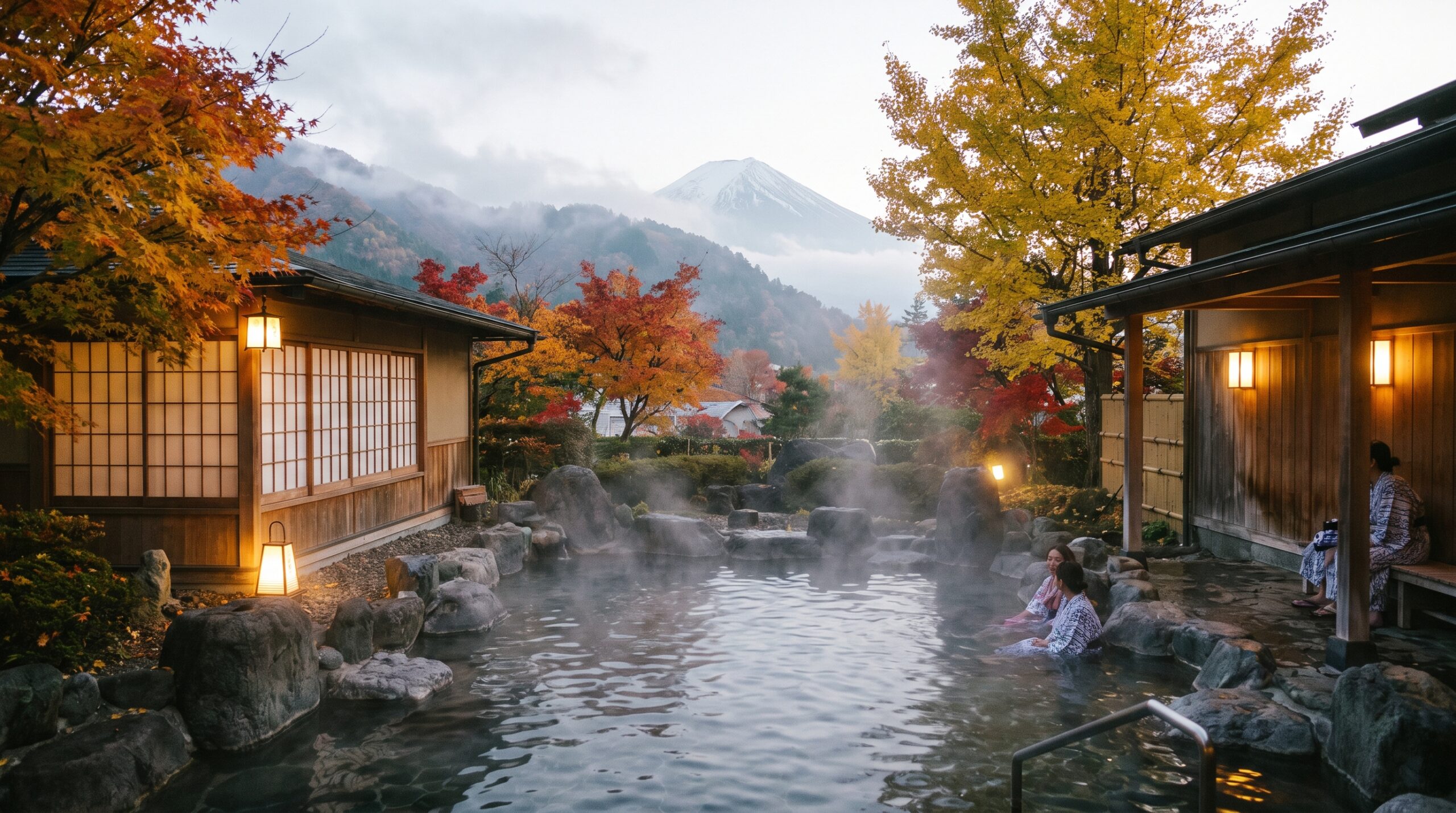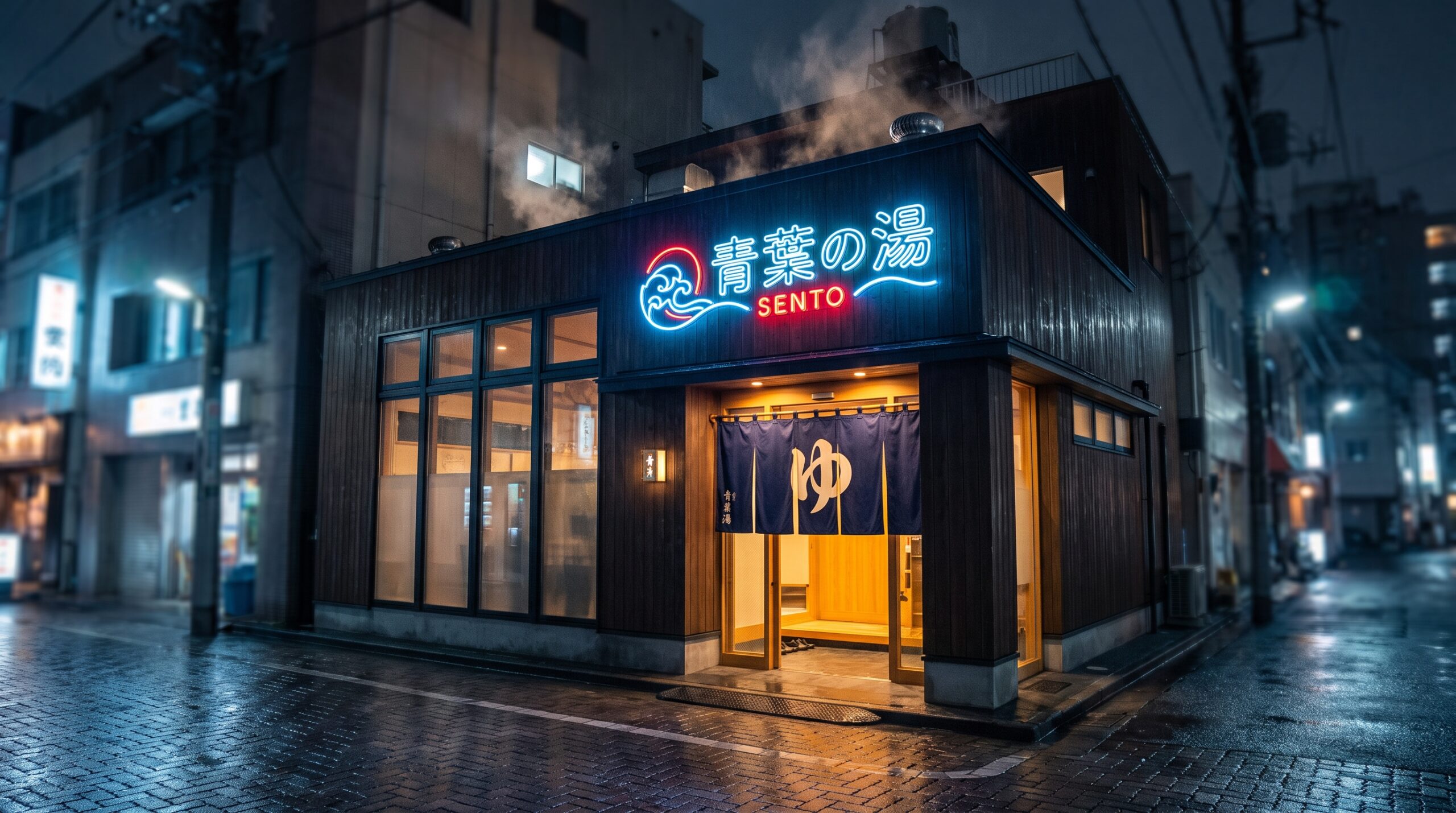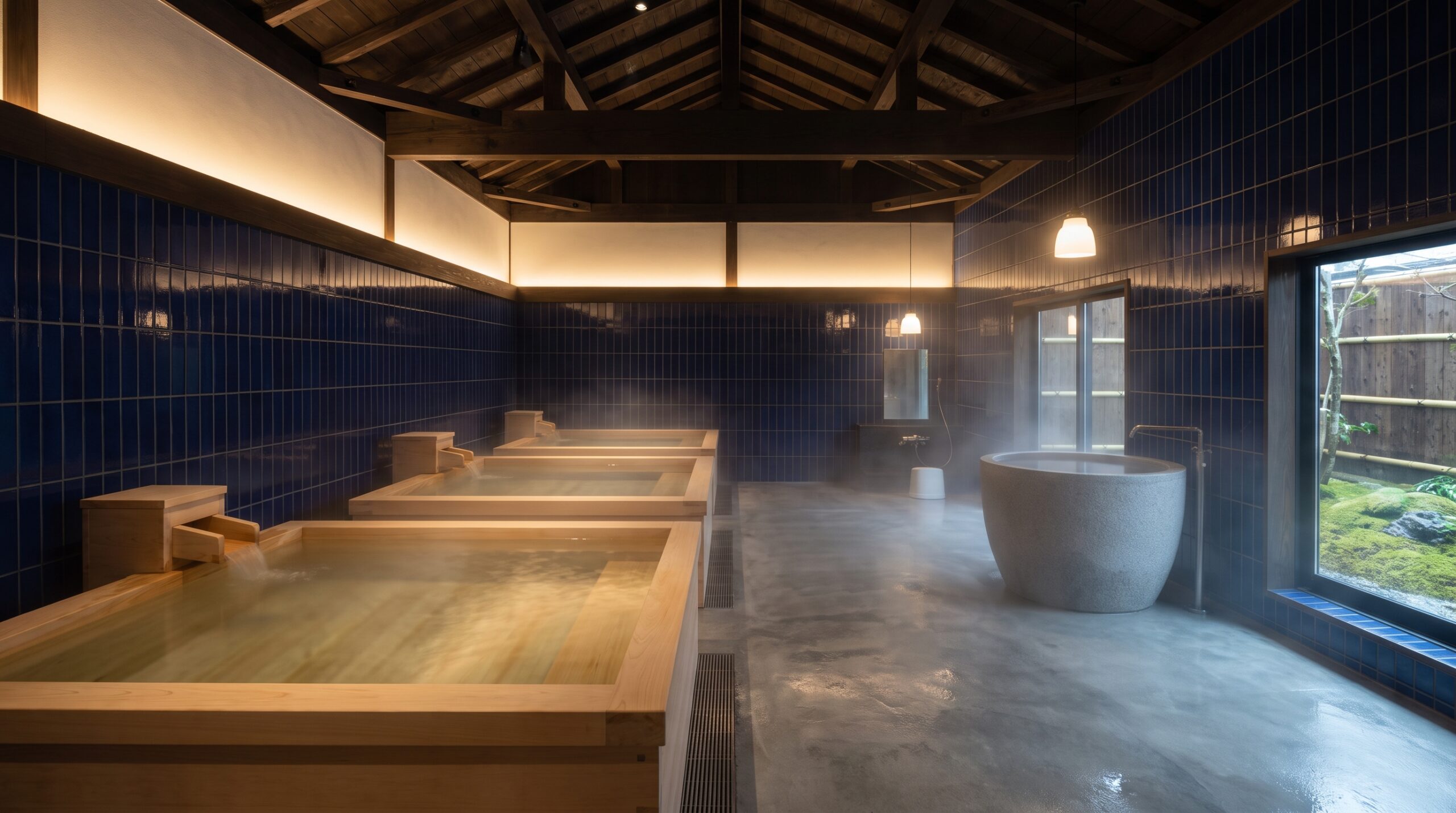
Japan’s onsen culture is one of its greatest gifts to travelers — but if you have tattoos, navigating it requires some advance planning. The short version: Tokyo has more tattoo-friendly bathing options than almost any other city in Japan, but you need to know where to look, and you need to be honest with yourself about what “tattoo-friendly” actually means at each place.
This guide covers public sento, private kashikiri baths, day-use facilities, and ryokan stays in and around Tokyo where tattooed guests are genuinely welcome — not just tolerated with a sticker.
Japan travel professional with 15+ years of industry experience, including senior roles at major Japanese travel companies and media. Every recommendation in this guide is based on firsthand knowledge. We are never paid directly by hotels to feature them.
- ⚡ Quick Picks
- The Honest Truth About Tattoos and Onsen in Japan
- Public Baths (Sento) That Welcome Tattoos
- Private & Kashikiri Onsen in Tokyo — Best for Heavily Tattooed Travelers
- Ryokan & Hotel Onsen Stays in Tokyo
- Best Tattoo-Friendly Onsen Near Tokyo (Day Trip or Overnight)
- Policies to Know Before You Book
- Getting Around Tokyo’s Onsen Neighborhoods
- FAQ
- Final Thoughts
⚡ Quick Picks
| Category | Pick | Why |
|---|---|---|
| Best Public Bath | Daikoku-yu Onsen (Sumida) | Fully tattoo-friendly, rooftop rotenburo, real hot spring water |
| Best Private / Kashikiri | Klook Tattoo-Friendly Open-Air Onsen | No communal bath — private outdoor tub, central Tokyo |
| Best Ryokan Stay | Onsen Ryokan Yuen Shinjuku | Rooftop onsen with Tokyo skyline views, Hakone spring water |
| Best Budget | Konparu-yu (Ginza) | Open since 1863, ¥550 entry, central location |
| Best Outside Tokyo | Kashiwaya Ryokan (Gunma) | Explicitly tattoo-friendly, 3 free private baths, ~2–3 hrs from Tokyo |
The Honest Truth About Tattoos and Onsen in Japan
Before diving into specific spots, let’s be straight about something most travel blogs gloss over.
Japan’s tattoo ban in onsen is real, and most places still enforce it. The historical reason is the association between visible tattoos and yakuza organized crime — a stigma that persists even as tattoo culture among younger Japanese has shifted. Tokyo’s metropolitan government does not legally mandate the ban; it’s a house policy at each facility. But at the majority of public baths, you will be turned away.
“Tattoo-friendly” means different things at different places:
- Truly unrestricted: Tattoos welcome in all communal areas, no questions asked. (Daikoku-yu, Koganeyu, most sento on the 1010 network)
- Cover-up required for communal baths: Small tattoos can be covered with skin-colored stickers available at the front desk. Larger or full-sleeve tattoos typically cannot be accommodated. (Some hotel onsen including Yuen Shinjuku — policies vary and change; always confirm directly)
- Private only: You can use the onsen only if you book a private/kashikiri bath. No communal bathing. This is the most reliable option for heavily tattooed travelers.
The safest strategy for heavily tattooed travelers: book a private onsen bath (kashikiri-buro), either as a day-use experience or as part of a ryokan stay. Private baths are yours alone — no communal bathing, no policy enforcement.
Public Baths (Sento) That Welcome Tattoos
Tokyo has over 430 sento still operating across the city. Around 19 have been verified as genuinely tattoo-friendly. They’re not in the tourist centers — they’re in residential neighborhoods where locals have been bathing for generations. That’s part of what makes them worth finding.
1. Daikoku-yu Onsen — Best Overall Public Bath
Location: Sumida (6-min walk from Oshiage Station, near Tokyo Skytree)
Daikoku-yu is the name you’ll see come up most in any honest guide to tattoo-friendly bathing in Tokyo. It draws natural hot spring water and offers a rooftop rotenburo with a direct view of Tokyo Skytree — a combination that’s hard to match anywhere in the city.
All communal bathing areas are fully tattoo-friendly, no conditions. The indoor baths include different temperature zones; the outdoor rooftop bath is the standout. On a clear evening, soaking under the Skytree lit up in blue is genuinely memorable.
- Price: ¥550 entry; sauna available at extra charge
- Hours: Weekdays 3:00 PM–next day 10:00 AM; Sat from 2:00 PM; Sun from 1:00 PM; closed Tuesdays
- Best for: Travelers staying in Asakusa, Skytree, or east Tokyo
2. Koganeyu — Coolest Vibe in the City
Location: Kinshicho, Sumida
Koganeyu was a humble neighborhood sento until its 2020 renovation transformed it into one of Tokyo’s most talked-about bathhouses. There’s a craft beer taproom at the entrance that doubles as a DJ booth — you rent your towel at the bar before heading in.
The baths themselves are separated by gender and feature a Mt. Fuji mural by artist Yoriko Hoshi. The temperature rotation (lukewarm to hot to cold plunge) is well-designed. The sauna is a proper addition. Tattoos are welcomed without restriction.
- Best for: Younger travelers, first-timers, craft beer fans
3. Kosugiyu — Old Tokyo Atmosphere
Location: Koenji, Suginami
Kosugiyu dates back nearly a century and looks the part — Early Showa-era architecture, the kind of place where regulars show up every evening out of habit. It’s a participant in Tokyo’s 1010 (Sento) tattoo-friendly network, so tattoos are accepted without restriction in the communal baths.
Koenji is one of Tokyo’s most interesting neighborhoods — vintage shops, live music venues, a genuine local feel. Add a post-sento ramen at one of the nearby spots and you’ve had a perfect Tokyo evening.
- Best for: Travelers who want the “real Tokyo” local experience
4. Konparu-yu — Central Location, Historic Character
Location: Ginza
Open since 1863, Konparu-yu hasn’t tried hard to modernize — and that’s a feature, not a bug. The Kutani porcelain tile mural is remarkable, the retro reception desk is exactly what you’d imagine a traditional bathhouse to look like, and it sits in Ginza, making it genuinely convenient for central Tokyo tourists.
Two baths (pleasantly warm and 42°C hot), plus occasional flower-infused soaks twice a month. Tattoos are accepted. At ¥550, it’s one of the best-value experiences you can have in Ginza.
- Price: ¥550
- Best for: Tourists in central Tokyo who want to experience a classic sento
5. Matsumoto-yu — Best Sauna
Location: Nakano
An 85-year-old sento that underwent a major renovation — the result is a modern bathhouse that kept the soul of the original. The standout feature is a pink herb-infused bath using kampo (traditional Japanese medicine) ingredients, alongside a solid dry stone sauna and a steam sauna designed for faster post-workout recovery.
Tattoos are welcome throughout.
- Best for: Sauna enthusiasts, wellness-focused travelers
6. Musashi Koyama Onsen Shimizuyu — Best Mineral Water
Location: Shinagawa
If you care about the water itself, Musashi Koyama is worth going out of your way for. The facility draws dark Kuroyu mineral water from 200 meters underground — the iron-rich black water is genuinely therapeutic and a distinctly Tokyo experience. Shinagawa is well-connected on the Yamanote Line.
- Best for: Onsen enthusiasts who want genuine mineral water in the city
Private & Kashikiri Onsen in Tokyo — Best for Heavily Tattooed Travelers
If you have large, visible tattoos — full sleeves, chest pieces, back work — the communal bath options may still feel uncomfortable even at “tattoo-friendly” facilities. The private bath route removes all uncertainty.
Hotel Day-Use Private Baths
Several Tokyo hotels with in-room or private-reserved onsen baths will accommodate tattooed guests on a day-use basis. Search specifically for “kashikiri onsen tokyo” or “private onsen day use tokyo tattoo” — availability and policies vary by property, so confirm directly before booking.
Ryokan & Hotel Onsen Stays in Tokyo
Onsen Ryokan Yuen Shinjuku — Best Ryokan Option in the City
Location: Shinjuku
This is the most-recommended option for tattooed travelers who want an onsen ryokan experience without leaving central Tokyo. The headline feature is an 18th-floor rooftop rotenburo with panoramic Tokyo skyline views — on clear mornings, Mt. Fuji is visible. The water is genuine Hakone spring water, trucked in daily.
Important policy note: Yuen Shinjuku’s tattoo policy has been reported inconsistently by guests. Some sources describe it as fully tattoo-friendly in communal areas; others report that small tattoos require covering with stickers (available at reception). The policy may also vary between the communal baths and the day-use pass. Always confirm directly with the hotel before booking, especially if you have large or uncoverable tattoos. If communal bathing is a concern, ask about private bath room options.
- Price: From approximately ¥22,000/night; day-use spa from approximately ¥3,000
- Best for: Travelers who want an onsen ryokan experience within Tokyo, couples, luxury travelers

Best Tattoo-Friendly Onsen Near Tokyo (Day Trip or Overnight)
Tokyo’s options are solid, but the most atmospheric onsen experiences are outside the city. These destinations are accessible by train and are genuinely welcoming of tattooed guests.
Kashiwaya Ryokan — Gunma (2–3 Hours from Tokyo)
Kashiwaya is one of the few ryokan in Japan that explicitly advertises a “Tattoo Friendly” policy on its English-language website — a meaningful distinction in an industry where many facilities still turn guests away. The property has only 14 rooms and offers three private hot spring baths that are free for all guests to use.
The rural Gunma setting is a complete contrast to Tokyo — quiet, forested, the kind of place where you hear the sound of the onsen water and nothing else. For travelers who want the full ryokan experience without the tattoo anxiety, this is the most reliable recommendation near Tokyo.
- Access: Approximately 2–3 hours from Tokyo by train
- Best for: Overnight ryokan experience, heavily tattooed travelers who want certainty
Hakone — 85 Minutes from Shinjuku
Hakone is the easiest and most rewarding onsen escape from Tokyo. Several ryokan and private onsen facilities in Hakone accept tattooed guests, particularly those offering kashikiri (private reserved) baths.
*(See our full guide: Best Ryokans in Hakone with Private Onsen)*
Nikko — 2 Hours from Tokyo
Nikko’s onsen scene is smaller but growing. Private bath options are available at several ryokan in the area.
*(See our full guide: Nikko Onsen Guide)*
Policies to Know Before You Book
Tattoo size matters more than you think. Some facilities that are listed as “tattoo-friendly” actually mean they’ll accept small tattoos that can be covered. If your tattoos are large, visible, or cover major body areas, the private bath or Kashiwaya approach is the safe route.
Cover-up stickers (sticker patches) are sold at many hotel and spa front desks for ¥100–500. They’re skin-colored adhesive patches designed to cover small tattoos. They work adequately for wrist or small arm pieces; they don’t work for sleeves, chests, or back tattoos.
Calling ahead is always the right move. Even at verified tattoo-friendly facilities, policies can change. A 30-second phone call (or email for English speakers) saves everyone’s time and eliminates anxiety on arrival.
Private baths are the universal workaround. Kashikiri baths — reserved private baths for 1–2 people, typically ¥1,000–3,000 for 45–60 minutes — are the accepted industry solution for tattooed guests. Even at facilities that restrict communal access, the private bath is almost always available.
Getting Around Tokyo’s Onsen Neighborhoods
Tokyo’s tattoo-friendly sento cluster in a few areas, all well-connected by public transit:
- Sumida (Daikoku-yu, Koganeyu): East of central Tokyo. Oshiage Station on the Hanzomon/Toei Asakusa lines; Kinshicho Station on the Sobu/Chuo Line.
- Suginami / Koenji (Kosugiyu): Koenji Station on the JR Chuo Line, 15 min from Shinjuku.
- Ginza (Konparu-yu): Ginza Station, central — every major line.
- Nakano (Matsumoto-yu): Nakano Station on the JR Chuo Line.
- Shinjuku (Yuen Shinjuku): Shinjuku Station — the major hub.
A Suica or Pasmo IC card covers every train, subway, and bus across the network. Tap in, tap out — no need to think about fare zones.
FAQ
Can I go to onsen in Tokyo with tattoos?
Yes — but only at specific facilities. Most Tokyo sento and onsen still have a no-tattoo policy. The ones listed in this guide are verified exceptions. For the safest experience regardless of tattoo size or coverage, choose a private (kashikiri) bath or a facility that explicitly states “tattoos welcome in all areas.”
What is a kashikiri onsen?
Kashikiri (貸切) means “reserved exclusively.” A kashikiri bath is a private onsen room booked by one party — typically a couple or family — for a set time period (usually 45–90 minutes). Because you’re alone, there’s no tattoo policy to worry about. It’s the standard industry solution for tattooed guests and is widely available at ryokan and day-use onsen facilities.
Do I have to cover my tattoos at Japanese onsen?
It depends on the facility. Some tattoo-friendly places genuinely don’t care. Others will provide skin-colored sticker patches to cover small tattoos. Large or uncoverable tattoos typically mean you need to either choose a fully tattoo-friendly facility or use a private bath. Never try to hide tattoos at a facility that has a no-tattoo policy — you risk being asked to leave mid-soak.
Are there onsen in central Tokyo that are tattoo-friendly?
Yes. Konparu-yu in Ginza and Onsen Ryokan Yuen Shinjuku are two options in central areas. Daikoku-yu in Sumida is within easy transit reach of Asakusa and the Skytree district.
How much does a tattoo-friendly onsen in Tokyo cost?
Public sento: ¥550–¥800 for entry. Private kashikiri baths: ¥1,500–¥5,000 for 45–90 minutes. Ryokan stays with onsen included: from ¥15,000–¥30,000 per person per night at mid-range properties.
Is it getting easier to find tattoo-friendly onsen in Japan?
Yes, gradually. Inbound tourism and the 2020 Tokyo Olympics accelerated policy changes at many facilities. Some regional tourism boards have actively encouraged onsen operators to adopt more flexible policies for international guests. The trend is positive — but the majority of facilities still maintain bans, particularly outside major tourist cities.
Final Thoughts
Tokyo is genuinely one of the more tattoo-friendly onsen cities in Japan — 19 verified public options, a handful of private bath facilities, and at least one ryokan in the city center. That said, it requires knowing where to go before you arrive. Walk into any sento blind and the odds favor a no-tattoo policy.
The honest advice: if you have large, prominent tattoos, go private. Kashikiri baths remove all uncertainty and are available throughout the city. If you want communal sento culture — the neighborhood regulars, the Mt. Fuji murals, the post-work ritual — Daikoku-yu or Koganeyu are the most reliable options.
For the full ryokan experience near Tokyo, Kashiwaya Ryokan in Gunma offers the most explicit and reliable tattoo-welcome policy of any property within day-trip range.
Check availability for onsen ryokan near Tokyo
*Related guides:*
- *Hakone Private Onsen Guide*
- *Nikko Onsen Guide*
- *Best Ryokans in Tokyo*
- *Tattoo-Friendly Onsen Kyoto* *(guide coming soon)*
- *Tattoo-Friendly Onsen Hakone* *(guide coming soon)*