By a Japan travel professional with 15+ years of industry experience | Updated May 2026
Nikko is one of Japan’s most rewarding day trips — and one of its most underrated overnight destinations. Most visitors come for the ornate gold-leaf shrines of Toshogu and leave by evening. That’s a mistake. The real Nikko — the volcanic lakes, mountain onsen villages, ancient cedar forests, and riverside ryokan — only reveals itself to people who stay.
This guide covers everything: the shrines, the onsen areas, how to get there, where to stay, and how to plan whether you have a day or three nights.
Disclosure: Some links in this article are affiliate links. If you book through them, I earn a small commission at no extra cost to you. All recommendations are based on industry knowledge and firsthand research — no paid placements, ever.
Quick Picks
| Category | Pick | Link |
|---|---|---|
| 🏆 Best Ryokan (Overall) | Fufu Nikko | Check availability on Agoda
 |
| 🌟 Best Luxury Hotel | The Ritz-Carlton, Nikko | Check availability on Agoda
 |
| 💴 Best Value Ryokan | Asaya Hotel (Kinugawa) | Check availability on Agoda
|
| 🛁 Best Private Onsen | Okunoin Hotel Tokugawa | Check availability on Agoda
|
| 🎯 Must-Do Activity | Toshogu Shrine at dawn | |
| 🚃 Getting There | Tobu Nikko Line from Asakusa |
What Is Nikko?
Nikko is a UNESCO World Heritage Site and national park in Tochigi Prefecture, about 140 km north of Tokyo. At its core are three extraordinary religious complexes built in the 17th century by the Tokugawa shogunate: Toshogu Shrine, Rinnoji Temple, and Futarasan Shrine.
But Nikko is also much more than its shrines. The surrounding national park contains:
- Four distinct onsen (hot spring) areas — from riverside resort towns to remote mountain villages accessible only by forest trail
- Lake Chuzenji — a volcanic caldera lake at 1,269m elevation, ringed by mountains and autumn foliage
- Kegon Falls — one of Japan’s three great waterfalls
- Senjogahara Marshland — a highland plateau of rare alpine flora
- The Iroha-zaka road — 48 hairpin switchbacks up a mountain, which has become an attraction in itself
Most tourists spend 4–6 hours here. Travelers who stay at least one night experience a completely different Nikko.
Top Things to Do in Nikko
1. Toshogu Shrine — The Must-See
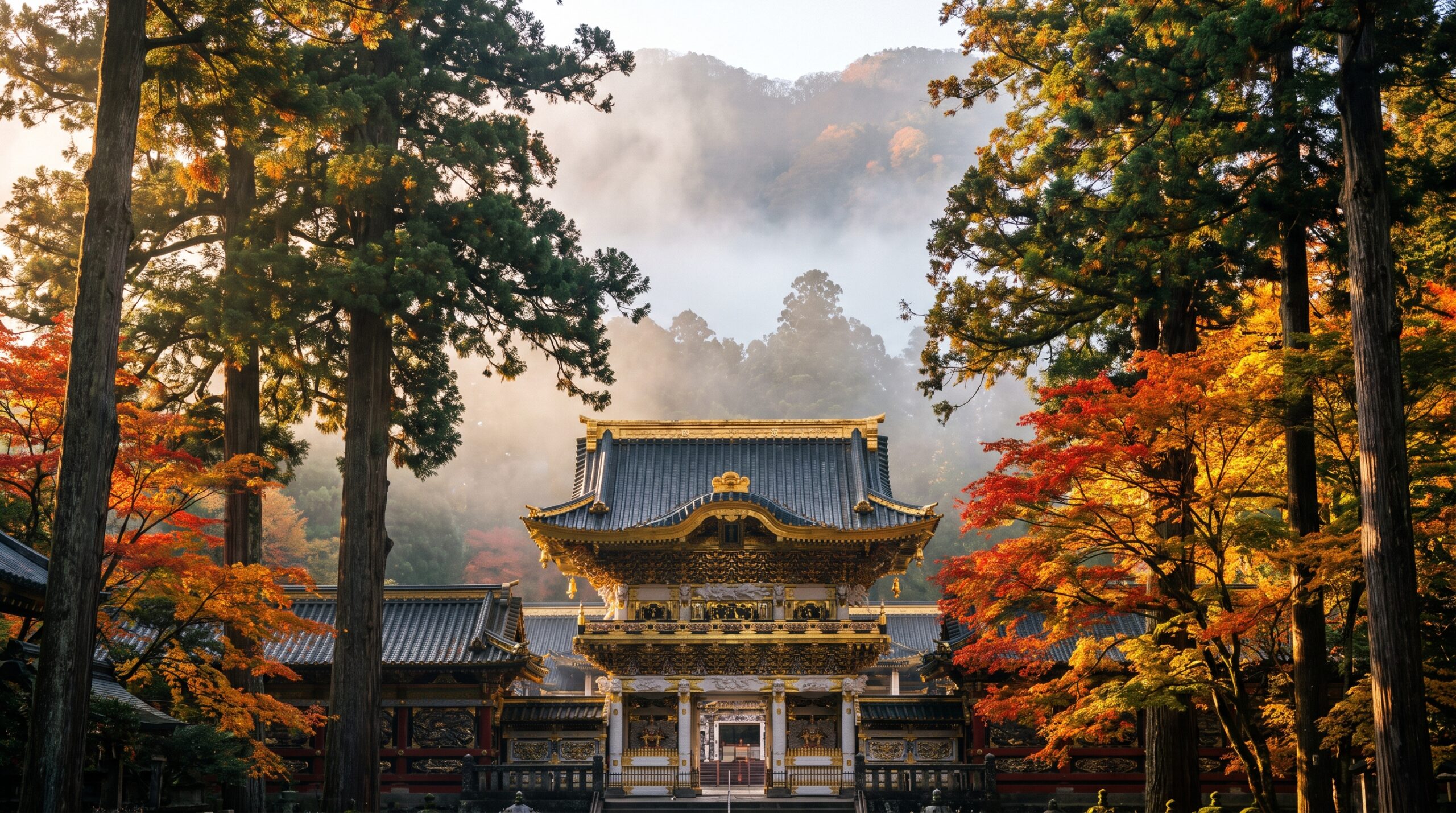
Japan’s most elaborately decorated shrine. Every surface of the main complex is carved and gilded — dragons, phoenixes, elephants, tigers — in a style that deliberately broke with the austere Zen aesthetic of most Japanese religious architecture. It was built to honor Tokugawa Ieyasu, the shogun who unified Japan after centuries of civil war.
Tips:
- Arrive at opening (9am) to beat tour groups
- The inner sanctum (Oku-miya) requires a separate ticket but is worth it — a 200-step stone staircase through ancient cedars to Ieyasu’s mausoleum
- The famous “see no evil, hear no evil, speak no evil” monkeys are above the sacred stable (Shinkyusha) — often overlooked
Admission: ¥1,300 adults (includes Oku-miya)
Hours: 9:00am – 5:00pm (4:30pm Nov–Mar)
2. Shinkyo Bridge — Best at Dawn or Dusk
The vermilion sacred bridge over the Daiya River, at the entrance to the shrine area, is one of the most photographed sights in all of Japan. It’s most beautiful at dawn before the crowds arrive, or in late afternoon light. A small admission fee applies to walk across.
3. Kegon Falls
A 97-meter drop over a volcanic cliff edge — one of Japan’s three designated “great waterfalls.” At peak flow (spring snowmelt, mid-June), the main falls are flanked by a dozen smaller cascades. An elevator descends inside the cliff to an observation platform at the base. 15 minutes by bus from Nikko Station.
Hours: 8:00am – 5:00pm (seasonal variations)
Elevator admission: ¥570 adults
4. Lake Chuzenji
The high-altitude caldera lake above Nikko is the main reason to go beyond the shrine area. At 1,269m, the air is noticeably cooler in summer — Nikko’s diplomats and wealthy families built retreats here to escape Tokyo’s heat, and several historic villas are still standing. The autumn foliage season (mid-October to mid-November) turns the lake shore vivid red and orange.
How to get there: Bus from Nikko Station, about 45 minutes up the Iroha-zaka switchback road. Taxis available.
5. Iroha-zaka Mountain Road
The 48-hairpin switchback road climbing 446 meters from the valley floor to the Oku-Nikko highlands is an experience in itself. If you’re going to Lake Chuzenji or Yumoto Onsen by bus, you’ll travel this road — it’s worth looking out the window. The ascent and descent use separate one-way roads (odd-numbered hairpins going up, even-numbered going down).
6. Senjogahara Marshland
A high-altitude wetland plateau filled with rare alpine plants, wooden boardwalks, and mountain views. An easy 2–3 hour walk through some of Japan’s most unusual highland scenery. Part of Nikko National Park, free to enter.
7. Yudaki Falls & Yumoto Onsen
A 70-meter cascade at the edge of a sulfuric hot spring village, accessible at the far end of the Senjogahara trail or by bus from Nikko. The Yumoto Onsen area is one of Japan’s most atmospheric mountain spring villages — tiny, remote, and genuinely beautiful in any season.
8. Kinugawa Gorge
The river gorge running through Kinugawa Onsen offers boat rides, a suspension bridge walk, and dramatic cliffs. Less visited than the shrine area, and a completely different mood — more resort, less history. Good for an afternoon if you’re staying in Kinugawa.
Onsen in Nikko
Nikko has four distinct hot spring areas — each with a completely different character.
Kinugawa Onsen
The most accessible hot spring area from Tokyo. A bustling riverside resort town with large traditional ryokan lining the Kinugawa gorge. Best for first-time onsen visitors who want convenience and a classic resort atmosphere.
Nikko Town Onsen
Springs near the central shrine area. Good base for early morning shrine visits before day-trippers arrive.
Oku-Nikko / Yumoto Onsen
Sulfuric springs at 1,470m elevation inside the national park — the most atmospheric of the four areas. The water is milky white with a distinctive mineral smell. Best for travelers who want a true mountain onsen retreat.
Okukinu Onsen
The most remote: four ryokan deep in the mountains, accessible only by shuttle bus or 90-minute forest hike. No cell service, no crowds. For serious onsen travelers only.
👉 Full guide to all four areas, ryokan picks at every budget: Best Ryokans in Nikko: Onsen Guide
Private Onsen in Nikko
For couples, honeymooners, or anyone who wants a private bath experience:
Top picks:
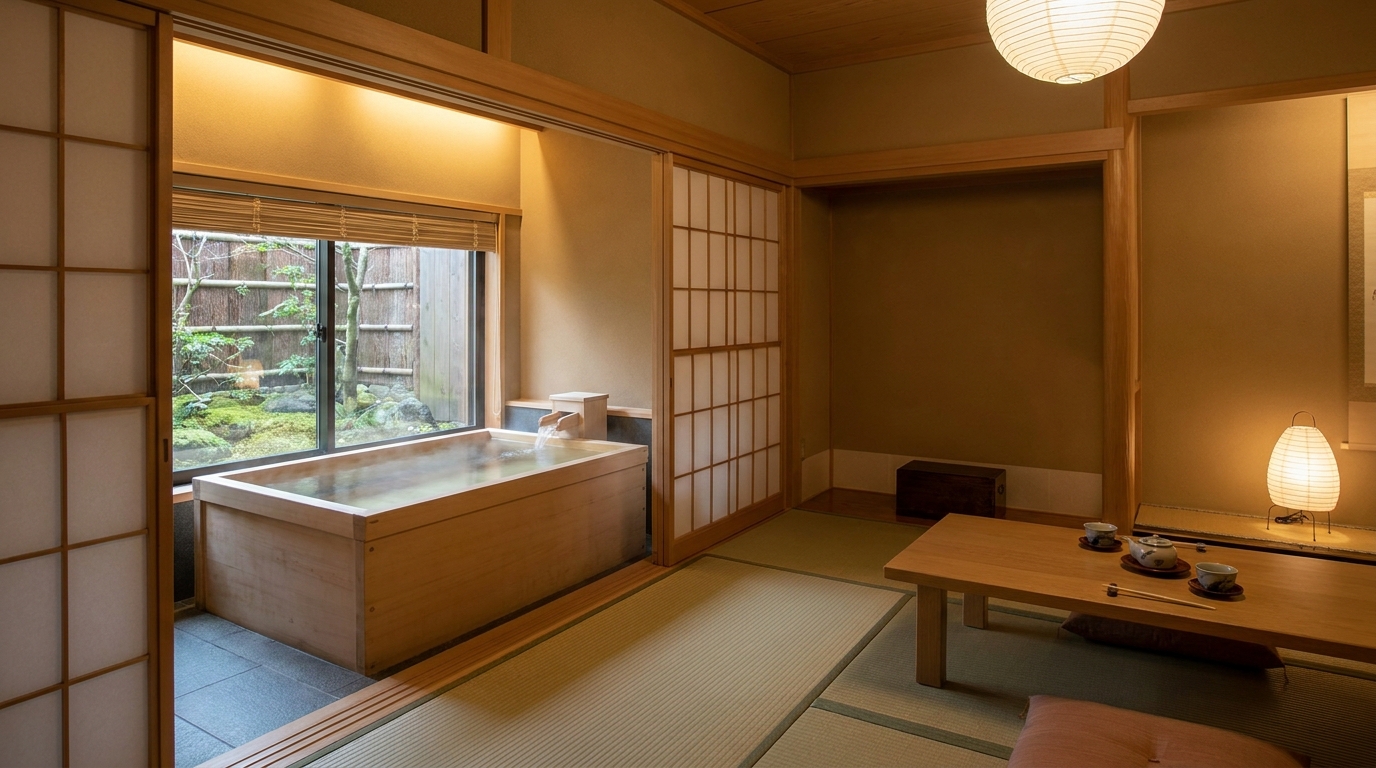
- Asaya Hotel (Kinugawa) — all 192 rooms have in-room private hot spring
- Okunoin Hotel Tokugawa (Oku-Nikko) — open-air kashikiri baths in forest setting
- Hotel Shikisai / Hotel Hanaan (Lake Chuzenji) — lakeside kashikiri baths
- Akebi Onsen — day-use private cabins (no overnight stay required)
👉 Full guide with kashikiri vs in-room comparison: Best Nikko Ryokan with Private Onsen
How to Get to Nikko from Tokyo
Tobu Nikko Line (Recommended for Most Travelers)
From Asakusa Station (Tokyo) → Tobu Nikko Station
- Spacia / Spacia X limited express: ~2 hours, ¥2,720–¥3,000 (reserved seat)
- Rapid express (change at Shimo-Imaichi): ~2.5 hours, ¥1,390 (unreserved)
- Trains depart every 30–60 minutes throughout the day
The Tobu Nikko line is the standard route for international visitors. The Spacia X is a premium train worth the slight upgrade for the comfortable seats and views.
JR Nikko Line
From Ueno Station (Tokyo) → Utsunomiya (Shinkansen) → Nikko Station (JR Nikko Line)
- Total time: ~1h50min
- Cost: ~¥5,000–6,000 (Shinkansen + local train)
- Best if you’re traveling from Kyoto or Osaka on a JR Pass
Tobu World Heritage Pass
For day-trippers, the Tobu World Heritage Pass (¥2,000–2,400) covers unlimited Tobu line travel to/from Nikko plus all buses within the Nikko area. Excellent value if you plan to take multiple buses to Chuzenji, Yumoto, or Kinugawa.
👉 Full transport guide with all options and tips: Getting from Tokyo to Nikko
Getting Around Nikko
Within the shrine area: Walking. Everything is within 15 minutes on foot from Tobu Nikko Station.
To Lake Chuzenji / Kegon Falls: Bus from Nikko Station (~45 min, ¥1,150 one way). Taxis available but expensive (~¥4,000).
To Yumoto Onsen: Bus from Nikko Station (~75 min). Or continue by bus from Chuzenji (~30 min more).
To Kinugawa Onsen: Tobu Kinugawa Line from Tobu Nikko Station (~30–40 min, ¥340). Or direct limited express from Asakusa.
Tobu World Heritage Pass covers all these buses — highly recommended for day-trippers doing multiple sites.
Day Trip or Overnight?
| Day Trip | 1 Night | 2–3 Nights | |
|---|---|---|---|
| Toshogu Shrine | ✅ | ✅ | ✅ |
| Shinkyo Bridge | ✅ | ✅ | ✅ |
| Kegon Falls | ✅ early start | ✅ | ✅ |
| Lake Chuzenji | ❌ (timing tight) | ✅ | ✅ |
| Ryokan & onsen | ❌ | ✅ | ✅ |
| Yumoto Onsen | ❌ | ❌ | ✅ |
| Senjogahara walk | ❌ | ❌ | ✅ |
| Kinugawa Gorge | ❌ | ✅ | ✅ |
Honest verdict: A day trip from Tokyo covers the shrine complex well. But Nikko’s best — the highland lakes, the mountain onsen villages, the early morning quiet before tour buses arrive — requires at least one overnight. Two nights is the sweet spot.
Where to Stay in Nikko
By Area
Kinugawa Onsen — Best for first-time ryokan visitors. Easy access, classic atmosphere, large traditional inns with excellent facilities.
Lake Chuzenji / Oku-Nikko — Best for scenery and luxury. The Ritz-Carlton is here. Spectacular in autumn foliage season.
Nikko Town — Best for shrine access and early morning visits.
Yumoto Onsen — Best for a remote mountain retreat. Limited options but genuinely atmospheric.
Top Picks by Budget
Luxury:
- The Ritz-Carlton, Nikko — world’s first Ritz-Carlton with its own onsen, Lake Chuzenji
- Fufu Nikko — boutique ryokan near shrines, in-room private onsen standard
Mid-range:
- Okunoin Hotel Tokugawa — Oku-Nikko heritage atmosphere, open-air kashikiri baths
- Hotel Shikisai — lakeside kashikiri baths, excellent value for location
Best Value:
- Asaya Hotel — 130+ years history, all rooms with private in-room onsen, Kinugawa
👉 Full guide with detailed picks at every budget: Best Ryokans in Nikko
When to Visit Nikko
| Season | Highlights | Watch Out For |
|---|---|---|
| Spring (late Apr–May) | Cherry blossoms in Kinugawa | Golden Week crowds |
| Early Summer (Jun) | Lush greenery, peak waterfall flow | Rainy season |
| Summer (Jul–Aug) | Cool highland escape from Tokyo | Busy family season |
| Autumn (mid-Oct–Nov) | Best foliage in Japan | Biggest crowds; book 3–6 months ahead |
| Winter (Dec–Mar) | Snow on shrines, quiet atmosphere | Cold; some reduced hours |
Best kept secret: Winter. Snow settling on Toshogu’s black-and-gold rooftops is stunning. The crowds disappear, prices drop, and an outdoor onsen in cold air is a different experience entirely.
Nikko 2-Day Itinerary
Day 1 — Shrines & Arrival
- 9:00 — Toshogu Shrine (arrive at opening)
- 11:00 — Rinnoji Temple & Futarasan Shrine
- 13:00 — Lunch near the shrine area
- 14:30 — Shinkyo Bridge & stroll along the Daiya River
- 16:00 — Check into ryokan (Kinugawa or Oku-Nikko)
- 18:00 — Kaiseki dinner, private onsen
Day 2 — Highland Lakes & Nature
- 8:00 — Japanese breakfast at ryokan
- 9:30 — Bus up Iroha-zaka to Lake Chuzenji
- 10:00 — Kegon Falls (elevator to base)
- 11:30 — Lake Chuzenji walk or boat rental
- 13:30 — Lunch at a lakeside restaurant
- 15:00 — Senjogahara Marshland walk (optional, add 2 hours)
- 17:30 — Return to Nikko Station; train to Tokyo
FAQ
Is Nikko worth visiting?
Yes — especially for an overnight stay. The shrine complex alone justifies the trip from Tokyo, but the real depth of Nikko (volcanic lakes, mountain onsen, ancient cedar forests) is only accessible to those who stay overnight.
How far is Nikko from Tokyo?
About 140 km north. By Tobu limited express from Asakusa: 2 hours. By Shinkansen + JR: ~1h50min.
Can you do Nikko as a day trip from Tokyo?
Yes. The shrine complex, Shinkyo Bridge, and (with an early start) Kegon Falls are doable in a day. But you’ll miss the onsen culture and the highland scenery that makes Nikko special.
What is Nikko known for?
Toshogu Shrine (UNESCO World Heritage, the most elaborate shrine in Japan), Lake Chuzenji, Kegon Falls, and four distinct onsen areas. Also famous for autumn foliage in October–November.
When is the best time to visit Nikko?
Autumn foliage (mid-October to mid-November) is peak season. Winter is underrated — snow on the shrines and an onsen in cold mountain air is a memorable combination. Book autumn well in advance (3–6 months for the best ryokan).
What is the Toshogu Shrine?
A 17th-century Shinto shrine complex built to honor Tokugawa Ieyasu, the shogun who unified Japan. It’s the most elaborately decorated religious complex in Japan — every surface is gilded and carved. Part of the Nikko UNESCO World Heritage Site.
How do I get around Nikko?
The shrine area is walkable from Tobu Nikko Station. Buses cover the rest: Lake Chuzenji (~45 min), Yumoto Onsen (~75 min). The Tobu World Heritage Pass covers unlimited bus travel — recommended for day-trippers.
Final Word
Nikko rewards people who stay longer than the shrine circuit. The volcanic highlands, the four onsen areas, the mountain trails — these are what separate Nikko from a photo opportunity and make it a genuine destination. Take the Tobu Spacia from Asakusa, arrive before the day-trippers, and book at least one night in a ryokan. You’ll wonder why you didn’t do it sooner.
Written by a Japan travel professional with 15+ years of experience. All recommendations are based on industry expertise and firsthand research — never paid placements.